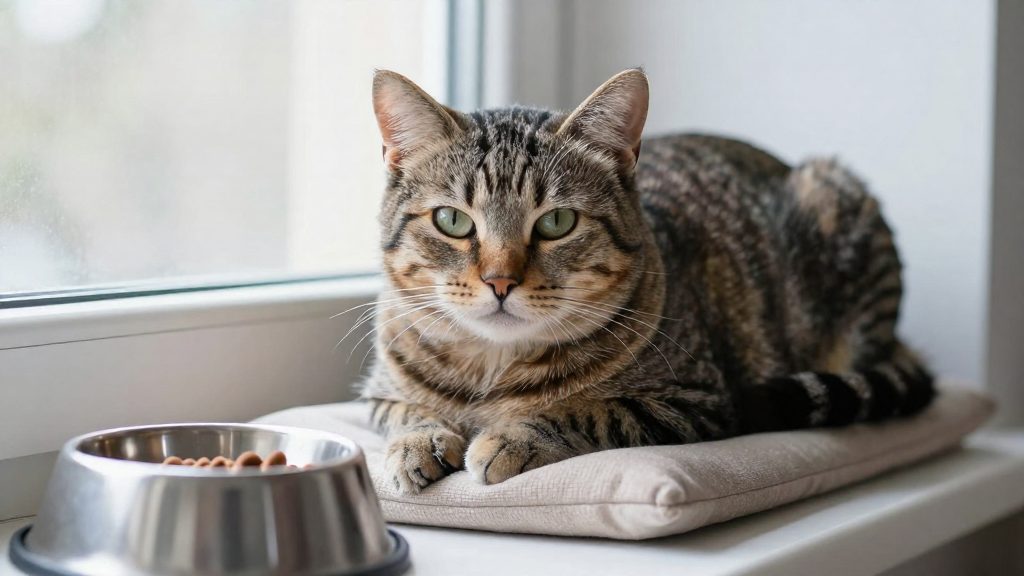
Adopting a senior cat from a shelter matters because shelters take in very large numbers of cats each year, and many of them are seniors. According to the ASPCA, about 3.2 million cats enter U.S. animal shelters annually. Adopting an adult shelter senior cat also has a practical advantage: an adult’s fully formed personality is already visible before the cat comes home.
Why adopt a senior cat from a shelter?
The scale of shelter intake
About 3.2 million cats enter U.S. animal shelters each year, according to the ASPCA (dated 2020-03-10). The same source states that many of these cats are seniors, but it gives no separate count for them. The exact number of senior cats taken in cannot be determined from this source. The intake figure therefore shows the overall size of the need, not the share of older cats within it.
What an adult cat’s temperament reveals
The ASPCA notes that an adult cat’s personality is fully formed, so adopters can judge temperament before taking the cat home. The behaviour that staff and foster carers observe is therefore the most direct evidence of how the cat will fit a household.
What age counts as a senior cat?
No single age makes a cat a senior. The two sources reviewed here use different cut-offs, so the same cat can be “senior” under one definition and not under another. The ASPCA defines a senior cat as one over 10 years old. PetMD, whose article is written by a veterinarian, uses a lower threshold: a senior cat is 7 years or older.
| Source | Senior definition | Publication date |
|---|---|---|
| ASPCA | Over 10 years | 2020-03-10 |
| PetMD (Jamie Lovejoy, DVM) | 7 years or older | 2025-09-28 |
The gap matters for adopters. A cat aged 7 to 10 is a senior under PetMD’s definition but not under the ASPCA’s. Shelter listings and rescue databases may use either definition, or none, so the stated age is the reliable detail to check. The label “senior” describes an age bracket, not a health status.
Any figure for the share of senior cats in a particular shelter should come from that shelter’s own records.
Benefits of an older shelter cat
Adult cats tend to settle in faster and need less constant supervision than kittens, according to the ASPCA (2020-03-10). Adult cats tend to need less constant supervision than kittens, but a newly adopted cat still needs time and attention while it adjusts.
Families with children should let the cat meet the children first (ASPCA, 2020-03-10); see the section on introductions below. Introductions to other cats in the home call for a similar planned, gradual approach, as PetMD recommends (PetMD, Jamie Lovejoy DVM, 2025-09-28).
Health issues to expect and vet visits
Treat an adopted senior cat as possibly carrying age-related conditions until a veterinarian has examined it. A study cited by PetMD found that more than 60% of cats aged 6 and older showed osteoarthritis on X-rays. That age threshold is lower than either senior definition in the sources, which are 7 years and older (PetMD) and over 10 years (ASPCA). Joint changes can therefore be present before a cat is classed as senior, so age-related checks are worth starting earlier than the label suggests.
PetMD also states that inflammatory bowel disease and kidney disease are more common in older cats. The source does not give frequencies for either condition.
| Condition | What the source says | Source |
|---|---|---|
| Osteoarthritis | Seen on X-rays in more than 60% of cats aged 6 and older, in a study cited by PetMD | PetMD (Jamie Lovejoy, DVM), 2025-09-28 |
| Inflammatory bowel disease (IBD) | More common in older cats; no frequency given | PetMD (Jamie Lovejoy, DVM), 2025-09-28 |
| Kidney disease | More common in older cats; no frequency given | PetMD (Jamie Lovejoy, DVM), 2025-09-28 |
Vet schedule after adoption
PetMD advises a baseline vet exam soon after adoption, followed by exams about twice a year (PetMD, Jamie Lovejoy, DVM, 2025-09-28). Use the first visit to establish a reference point: ask the clinic which screenings it recommends for a cat of this age and history, and which tests it would consider for the conditions in the table above.
Between visits, record anything that changes, such as appetite, weight, water intake, litter box use, or reluctance to jump. Do not wait for the next scheduled exam if you notice such changes: contact your veterinarian promptly. Dated notes also give the vet a comparison point at each exam.
How do you choose the right senior cat?
Choose a senior cat by its temperament, not by its age alone. Start by asking staff to describe how the cat behaves with strangers, during handling, around noise, and when it is left alone in a room. Ask for specific observations of what staff have seen, not general labels such as “friendly.”
Match temperament to your household
Before visiting, write a short household profile: who lives in the home, how many hours people are away, whether other animals live there, and how many visitors come by. Then compare the profile with the cat’s observed behaviour.
| Household profile | Temperament signals to look for |
|---|---|
| Frequent visitors or a noisy home | Calm reactions to new people and sudden sounds |
| Other pets already in the home | Described behaviour with other animals |
| Long hours alone during the day | Settles on its own, without needing constant attention |
| Owner who wants a lap cat | Accepts being touched and picked up, or initiates contact |
Ask about history and routines
A cat’s past routine shapes how it adapts to a new home. Ask:
- Why was the cat surrendered or brought in, and what is known about its previous home?
- What was its daily routine: feeding times, litter box habits, favorite resting spots?
- Has it lived with other animals, and how did those relationships go?
- Does it have known medical needs, medications, or a special diet? Ask for any records in writing.
- Has it been in a foster home, and what did the foster carer record?
Preparing your home for an older cat
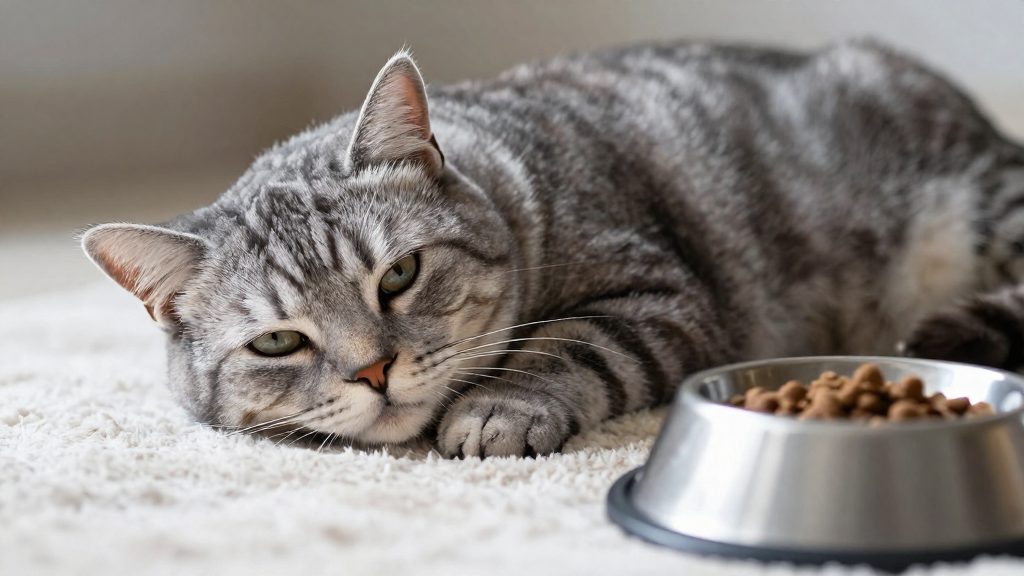
An older cat needs a home where routine tasks (using the litter box, eating, drinking, climbing, and resting) take little effort. PetMD, in adoption guidance written with veterinarian Jamie Lovejoy, DVM (2025-09-28), lists making the home accessible among its core adoption tips. The changes below are general principles. Adjust them to the cat’s actual movement and your home’s layout, and ask shelter staff how the cat moves and uses space there.
Low-entry litter box and reachable food and water
Choose a litter tray with a low entry that the cat can step into without jumping. Place it on the same floor as the cat’s main resting area so it does not need stairs or a climb. Keep it in a quiet spot that is easy to reach, not behind a closed door or at the end of a long corridor.
Put food and water bowls at floor level, on the floor where the cat spends most of its time. Keep them apart from the litter box, as many cats prefer not to eat near their toilet area. Shallow, wide bowls are easier to reach for a cat with stiff joints. Keep the water bowl in one fixed place so the cat can find it without searching, which matters more if the cat’s eyesight is weaker.
Non-slip flooring and ramps for jumps
Bare hardwood, laminate and tiles make it harder for a cat to push off and land safely. Lay rugs or runners with non-slip backing along the routes the cat uses most, such as between the bed, litter box and bowls. Check that rugs lie flat, because a curled edge can catch a paw.
Where a jump onto a sofa or bed is part of the cat’s routine, add a ramp or stepped platform with a textured surface. Fix it firmly so it does not shift under weight. Move or remove high furniture that the cat no longer needs to reach.
Quiet resting spots away from foot traffic
Older cats often rest for long periods, so provide at least one quiet resting spot in a low-traffic room, away from external doors, the front entrance and the main walkway. Choose a place that is warm, free of drafts, and where the cat can see the room without sitting in the middle of it.
A bed with raised, soft sides or a covered cave lets the cat settle without being disturbed by people passing. If the household is busy, add a second resting spot in a different room. Avoid placing any bed beside appliances that switch on and off, such as a washing machine, because sudden noise can interrupt rest.
How long does a senior cat take to settle in?
No fixed timeline fits every adopted cat. The sources give no number of days or weeks, so settling is best understood as a sequence of stages that each cat moves through at its own pace. The stages below describe typical behaviour and are not a clinical schedule.
| Stage | What normal settling looks like |
|---|---|
| Arrival | The cat stays in a limited area, moves cautiously, and avoids contact with people. |
| Exploration | The cat investigates other rooms, approaches familiar furniture, and tolerates people at a distance. |
| Routine | The cat anticipates feeding and play times and starts to seek contact on its own terms. |
Progress is rarely a straight line. A cat may show confidence in one room and retreat when a new sound or visitor appears. Judge settling by the overall direction over time, not by a single good or bad day.
Gradual exposure to noise and routine
The gradual exposure method keeps the cat’s stress levels manageable while it learns the household. Introduce one change at a time:
- Keep feeding and play times consistent from the first day, so the cat can predict its day.
- Introduce household noises one at a time and at low volume, such as a vacuum cleaner in another room or a doorbell rung softly, then increase the volume only when the cat stays relaxed.
- Let the cat approach sounds and people at its own pace. Do not carry or corner it to show it a new thing.
- Keep the routine predictable during the exploration stage, since regular timing helps a cat adjust to a new home.
Introducing your new cat to other pets
Introduce a new senior cat to resident animals in stages: first a separate room, then scent exchange, then short supervised meetings. PetMD, with a veterinarian author, advises introducing a new cat slowly to other cats (PetMD, Jamie Lovejoy DVM, 2025-09-28). The same gradual approach is generally used with resident dogs and other pets, but ask shelter staff or your veterinarian for guidance specific to your animals.
Start with a separate room
Give the cat one room that holds its food, water, litter tray, bed and hiding places. Keep resident animals out of that room. This gives the cat a controlled space to learn the household and a retreat if it feels threatened. Keep the layout of that room unchanged for the first days so the cat always knows where its resources are.
Exchange scents
Once the cat eats and uses its tray calmly in its room, begin a scent exchange. Rub a soft cloth on the cat’s face, then place it near the resident animals’ feeding area. Give the cat a cloth or bedding that carries the resident pets’ smell in return. Repeat this so each animal links the other’s scent with nothing bad happening. Scent exchange lets residents recognise the newcomer before they see it, which reduces surprise at the first meeting.
Run supervised first meetings
Move on to face-to-face contact only when the cat is eating well and moving around its room without hiding constantly. Keep each meeting short and end it while every animal is still calm. Use a barrier such as a baby gate or a door left open a couple of inches, with the resident dog on a leash if there is one.
| Stage | Method | Move on when |
|---|---|---|
| Barrier contact | Cat and resident pet see each other through a gate or cracked door | Both eat calmly on their side of the barrier |
| Short open-room contact | Resident pet on leash, cat free to retreat to a high place | Neither animal hisses, growls, chases or fixates |
| Unsupervised time | Animals share the house with the cat’s room still available | Both settle without an adult intervening for several days |
Separate the animals immediately if you see hissing, growling, flattened ears, puffed fur or a dog staring fixedly at the cat. Keep birds in their cages and fish tanks out of the cat’s reach throughout the process.
Meet children before bringing the cat home
The ASPCA advises that families with children let the cat meet the children first (ASPCA, 2020-03-10). Arrange this at the shelter or foster home, with adults present and children calm. Children should sit low, let the cat approach them, and avoid reaching over its head. Explain before the first visit that the cat can choose when to come closer.