Most US states and localities require dog licenses, but there is no single federal rule. The requirement comes from state statutes and from city or county ordinances, so whether a dog must be licensed depends on where it lives. Boston, Massachusetts, licenses dogs under state law and a city ordinance. Palo Alto, California, bases its licensing on California state law. Owners should check the rules of their own municipality rather than assume a national or statewide standard.
Do cities in the US require dog licenses?
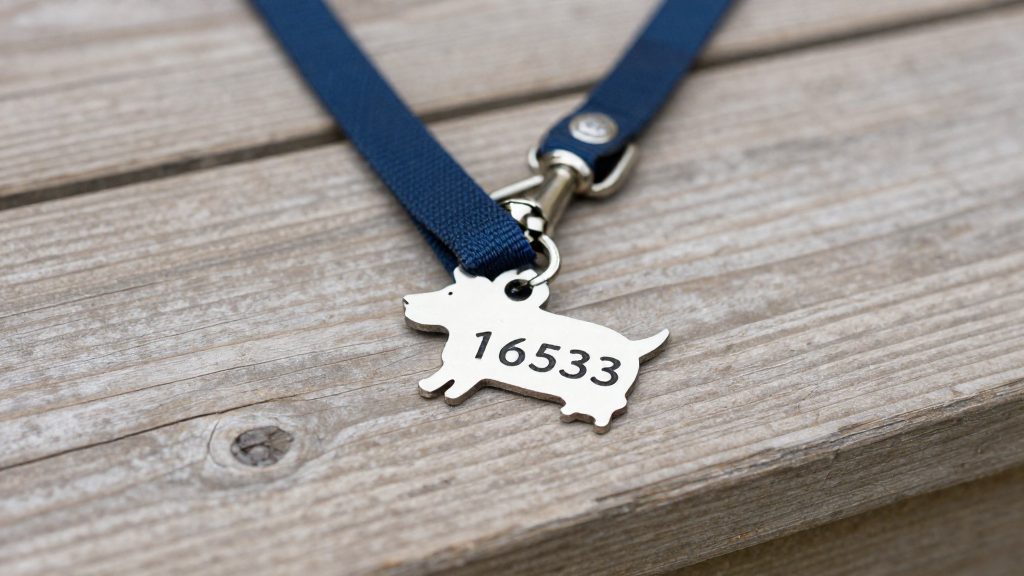
A dog license is a registration tied to a specific dog. Vetstreet describes it as usually involving a form, a small fee and a collar tag, and notes that it helps lost dogs get home. Moving to a new place usually means relicensing the dog there. (Vetstreet, 2011-07-12)
Boston, Massachusetts
Boston requires dogs to be licensed every year. The requirement rests on Massachusetts General Laws chapter 140, sections 137 and 141, and on city ordinance 10-1.9C. The city states that it strictly enforces this rule. To buy a license, owners must show proof of rabies vaccination. For puppies, this applies once they reach six months old. (City of Boston, 2026)
Palo Alto, California
Palo Alto’s licensing rests on California state law. The state’s rabies-vaccination law means the city needs licensing records, and owners must show proof of a rabies vaccination to license a dog. A rabies tag from a vet does not replace the city license tag. (City of Palo Alto, 2026)
Comparing the two models
| Jurisdiction | Legal basis | Key requirement (per fact sheet) |
|---|---|---|
| Boston, MA | MGL ch. 140 §§137, 141; city ordinance 10-1.9C | Annual license; licenses run April 1 to March 31; rabies proof required |
| Palo Alto, CA | California state rabies-vaccination law | Licensing records kept for rabies compliance; rabies proof required; vet rabies tag is not a substitute |
| Other US localities | State statute and/or local ordinance | Many renew yearly; some offer a lifetime license for dogs with permanent ID such as a microchip (Vetstreet, 2011-07-12) |
Why do local governments require licenses?
The sources show two purposes for local dog licenses: keeping the rabies-vaccination records that Palo Alto’s city needs, and helping lost dogs get home. Boston also states that it strictly enforces its requirement. Details vary from place to place.
Rabies control through verified vaccination records
Licensing gives a city a way to link each dog to a verified rabies vaccination record. In Palo Alto, California, state rabies-vaccination law means the city needs licensing records, and owners must show proof of a rabies vaccination (City of Palo Alto, 2026). The city license is therefore a local record, not just a receipt. A veterinarian’s rabies tag does not replace the city license tag, so a dog in Palo Alto needs the city license tag in addition to the rabies tag (City of Palo Alto, 2026).
Reuniting lost dogs with their owners
A license helps lost dogs get home. Vetstreet notes that a license helps lost dogs get home, and that the license usually includes a form, a small fee and a collar tag (Vetstreet, 2011-07-12). Some places offer a lifetime license for dogs with permanent identification, such as a microchip, which removes the yearly renewal step (Vetstreet, 2011-07-12). Because the registry is local, moving usually means relicensing (Vetstreet, 2011-07-12).
Funding local animal services and enforcement
The fact sheet does not state how license revenue is allocated, so this section makes no claim about it. What the sources do show is that licensing is a legal duty with enforcement behind it. Boston requires dogs to be licensed every year under Massachusetts General Laws ch. 140 §§137 and 141 and city ordinance 10-1.9C, and the city says it strictly enforces the requirement (City of Boston, 2026). A current registry is what enforcement staff check against. To confirm how a given city uses its license revenue, consult that city’s animal-control budget or ordinance text.
How does dog licensing work?
Dog licensing in the United States is set by each state, city or county, so the exact steps depend on where the dog lives. Most US states and localities require dog licenses, and a license usually involves a form, a small fee and a collar tag (Vetstreet, 2011-07-12). Two city examples, Boston and Palo Alto, California, show how the mechanics work in practice.
Proof required at purchase
The first step is a rabies certificate. Boston requires proof of rabies vaccination to buy a license (City of Boston, 2026). In Palo Alto, state rabies-vaccination law means the city needs licensing records, and owners must show proof of a rabies vaccination (City of Palo Alto, 2026). Ask your veterinarian for the certificate before you apply, since the licensing office or online portal will check it.
Tag rules
A rabies tag from your vet is not a license. In Palo Alto, a vet’s rabies tag does not replace the license tag (City of Palo Alto, 2026). Keep the two tags separate: the rabies tag records vaccination, and the license tag identifies the dog as licensed with the local authority.
Annual renewal or lifetime options
Licenses are not always permanent. Boston requires dogs to be licensed every year under Massachusetts General Laws ch. 140 §§137 and 141 and city ordinance 10-1.9C (City of Boston, 2026). Many other places also renew yearly. Some offer a lifetime license for dogs with permanent identification, such as a microchip (Vetstreet, 2011-07-12). Because the Vetstreet source dates from 2011, check your local licensing office for current lifetime-license rules before you assume one is available.
What does a dog license cost?
The two US cities in the verified data set dog license fees in different ways. Boston sets a flat fee that depends on whether the dog is intact, while Palo Alto reduces the fee when the owner provides a spay or neuter certificate. Boston’s documented fees are $30 for an intact dog and $15 for a neutered or spayed dog. Palo Alto’s verified records do not state a base fee, so the only Palo Alto figure this section can report is the reduction it provides.
| City | Qualifying status or document | Documented fee effect |
|---|---|---|
| Boston | Intact dog | USD 30 |
| Boston | Neutered or spayed dog | USD 15 |
| Palo Alto | Spay or neuter certificate | Fee halved |
| Palo Alto | Service dog with signed affidavit | Licensed free |
Boston’s fee is set by the dog’s reproductive status. The USD 15 rate for a neutered or spayed dog is exactly half the USD 30 rate for an intact dog. Boston licenses run from April 1 to March 31, so each listed fee covers that licensing period.
Palo Alto’s reduction applies to whatever fee is set. Because the certificate halves the fee rather than setting a fixed amount, the final cost depends on the base fee that the city applies at the time of purchase. Owners who want the exact amount should compare the current base rate with the halved figure.
Service dogs are a separate category in Palo Alto. Service dogs are licensed free when the owner signs an affidavit. The verified data does not say whether Boston offers a similar exemption, so no Boston equivalent should be assumed.
More broadly, the verified data notes that many places renew licenses yearly, some offer a lifetime license for dogs with permanent identification such as a microchip, and some discount the fee for spayed or neutered dogs (Vetstreet, 2011-07-12). The Vetstreet source is dated, so current local rates should be checked against the city’s own published figures.
How old must a puppy be to need a license?
No single US-wide age applies. Licensing is set by each city, county or state, so the age at which a puppy must be licensed depends on where it lives. The two sources available for this topic give different thresholds. The City of Boston states that proof of rabies vaccination, which is required to buy a license, applies to puppies once they reach six months old. The sources give no separate minimum licensing age for Boston. General guidance (Vetstreet, 2011) says puppies may need a license from about three months old, depending on the location.
Age thresholds by source
| Source | Puppy age threshold | Condition attached |
|---|---|---|
| City of Boston (2026) | Six months old | Proof of rabies vaccination is required to buy the license |
| Vetstreet (2011-07-12) | About three months old | Depends on the location |
The Vetstreet article is dated 2011, so check the current rule with the local licensing authority before relying on it.
Why the threshold varies
The age is set by local ordinance, not by a single federal rule. Two factors shape it:
- Local ordinance: Boston applies its requirement at six months, and general guidance points to about three months in other places. Each city or county writes its own threshold.
- Rabies vaccination: In Palo Alto, California, state rabies-vaccination law means the city keeps licensing records, and owners must show proof of rabies vaccination. The source for Palo Alto does not state a puppy age, so the rabies requirement is the point to check there.
How to find the age that applies to your puppy
- Identify the authority that covers your address. This may be a city, a county or a state agency.
- Search that authority’s dog licensing page for the minimum age.
- Gather the rabies vaccination record early, because several places require it before a license can be issued.
What happens if you don’t license your dog?
Owning an unlicensed dog can lead to fines, and the amount depends on the city. In Palo Alto, California, owners of unlicensed dogs are fined $50 to $150 per dog, so a household with three unlicensed dogs faces that range three times. In Boston, Massachusetts, the city states that it strictly enforces its annual licensing requirement, and owners of unlicensed dogs may be fined. Boston’s requirement rests on Massachusetts General Laws chapter 140, sections 137 and 141, and city ordinance 10-1.9C.
| City | Stated consequence | Source |
|---|---|---|
| Palo Alto, California | Fine of $50 to $150 per dog for owners of unlicensed dogs | City of Palo Alto, 2026 |
| Boston, Massachusetts | Owners of unlicensed dogs may be fined; the city strictly enforces the annual requirement | City of Boston, 2026 |
The verified figures do not give a dollar amount for Boston fines. Treat any specific Boston penalty figure you encounter elsewhere as unconfirmed until the city publishes it.
Palo Alto ties enforcement to records. State rabies-vaccination law means the city needs licensing records, and owners must show proof of a rabies vaccination. Vaccination status and licensing status therefore sit in the same city system.
How do you check your city’s rules?
Licensing rules come from two layers: a state law and a local ordinance. Start with the city or county animal services site, then confirm the requirement in the state statute and the local code. Use the office’s own answer as the final check, because the Vetstreet guidance (2011-07-12) notes that rules vary by place, and that article is dated.
Step 1: Search the city’s animal services or licensing pages
Search the city name with terms such as “dog license,” “animal licensing,” or “animal services.” Look for the page that states whether licensing is required, how often it renews, and which documents you must bring. Official city pages are more reliable than third-party summaries.
Step 2: Compare the state statute with the local ordinance
A state statute sets the baseline, and a city ordinance adds local terms. Boston shows how the two connect. Its annual licensing requirement rests on Massachusetts General Laws ch. 140, §§137 and 141, and on city ordinance 10-1.9C. Record each citation you find, then check whether the local text adds requirements.
| Layer to check | What to look for | Example from the fact sheet |
|---|---|---|
| State statute | Whether licensing is required at all and any rabies-related duties | Massachusetts ch. 140 §§137 and 141 (Boston) |
| Local ordinance | Renewal period, documents, enforcement | Boston ordinance 10-1.9C, which the city says it strictly enforces |
| Rabies rule | Proof the city needs before issuing a license | Palo Alto: state rabies law means the city needs licensing records |
Step 3: Contact the licensing office
If the website is unclear, call or email the animal services or licensing office. Ask four questions:
- Is a license required for my dog in this city, and does it renew yearly or at another interval?
- Which documents must I bring, such as proof of rabies vaccination?
- Does a vet’s rabies tag count as a license? In Palo Alto, it does not replace the license tag.
- Do I need a new license after moving to a different city or county? Vetstreet notes that moving usually means relicensing.
Frequently asked questions
Do I need a dog license if there is no federal rule?
Yes, if your state or local government requires one. Because the requirement comes from state statutes and city or county ordinances, the answer depends on your address, and your municipal animal control office is the authoritative source for your area.
What do I need to license a dog in Boston?
Boston requires proof of rabies vaccination before a license is issued, and for puppies this applies once they reach six months old. Fees are $30 for an intact dog and $15 for a spayed or neutered dog, and licenses run from April 1 to March 31 (City of Boston, 2026).
Does my vet’s rabies tag count as a license in Palo Alto?
No. In Palo Alto, a rabies tag from a vet does not replace the city-issued license tag, and owners of unlicensed dogs can be fined $50 to $150 per dog (City of Palo Alto, 2026).