For a lost dog, the agency that matters is the one that serves the place where the dog went missing, which may differ from where you live. In Washington, DC, the municipal body is the DC Animal Control Facility. In New York City, it is the NYC Animal Care Centers (ACC) network. Sources in this brief do not set out a general rule for county or private shelter jurisdiction, so confirm the boundaries with your local government before assuming which body holds a stray.
Who handles lost dogs in your area?
Municipal animal control and other shelters
The DC source tells owners to check the Animal Control Facility, and the NYC source lists ACC locations as places to file and visit. No central registry of lost pets exists, according to ASPCA data cited by WebMD, so a report filed with one body is not automatically visible to others. You therefore need to identify which body is responsible for the location.
| Market | Agency named in the sources | Jurisdiction note |
|---|---|---|
| Washington, DC | Animal Control Facility | Check it regularly after filing (DC Health, 2026) |
| New York City | NYC Animal Care Centers (ACC) | Accepts lost pet reports in person; phone reports go through 311 or 212-639-9675 (NYC 311, 2026) |
When the loss happened in another district
If your dog went missing away from your home address, the location of the loss determines which agency to contact first. DC guidance asks owners to state where the animal was lost, which makes that location part of the report itself.
How do I report a lost dog to animal control?
To report a lost dog to animal control, call the reporting line for the city where the dog went missing as soon as you notice it is gone. The two markets with documented phone channels are Washington, DC and New York City, and each uses a different number. In DC, you call and file a Lost Report. In NYC, you can also file a lost pet report in person at an ACC location.
Washington, DC
In Washington, DC, you report a lost animal by calling (202) 888-PETS and filing a Lost Report immediately. Call this number and file a Lost Report immediately; ask the staff to confirm your report has been recorded. DC Health also advises checking the Animal Control Facility regularly after you file.
New York City
In New York City, you can report a lost dog by calling 311 or 212-639-9675 (212-NEW-YORK). Both numbers are valid routes for a lost dog report, so use whichever you can reach first. The NYC source lists both numbers as phone options, and you can also file in person at an ACC location.
Filing channels at a glance
| City | Channel | Number | Timing |
|---|---|---|---|
| Washington, DC | Lost Report by phone | (202) 888-PETS | Immediately after the dog is found missing |
| New York City | 311 service line | 311 | Immediately after the dog is found missing |
| New York City | Direct lost dog line | 212-639-9675 | Immediately after the dog is found missing |
What information should I have ready?
Before you contact animal control, write down a fixed set of descriptors. Agencies match a found dog against a lost report by comparing these details, so a precise description is more useful than a general one. In Washington, DC, you are asked to be ready to describe the animal’s breed, size, appearance and veterinary history when you file a Lost Report (DC Health, 2026). The three groups below cover what to have on hand.
Physical description
The breed, size and markings are the first details an intake officer compares against found-animal records. Write them in plain, consistent terms, and note which features you are certain of and which are estimates.
| Item | What to record |
|---|---|
| Breed or mix | The breed name, or the closest mix you can support, and whether it is a guess |
| Size | Approximate weight or a size category (small, medium, large) and approximate height at the shoulder |
| Coat | Main colour, any secondary colours, coat length and texture |
| Markings | Patches, blaze, socks, tail-tip colour, ear shape, eye colour, scars or other visible marks |
Veterinary history
The veterinary history tells the agency whether the dog may need prompt medical care. Record the date of the last vaccinations, any chronic condition, any allergy, and any medication the dog takes, with the name of the medication. Also note the name of the clinic that treats the dog, so staff can confirm records if a found dog is brought in.
Last-seen location
Give the exact last-seen location: the street address or cross street, the nearest landmark, and the time you last saw the dog. If the dog got out while you were away from home, record that place as its own entry, separate from your home address. DC guidance asks owners to state where the animal was lost when it was away from home (DC Health, 2026). Note the direction the dog was heading if you saw it move.
Which shelters should I contact and visit?
Start with the shelters within 60 miles of home. WebMD, citing ASPCA data, advises filing lost pet reports with shelters within that distance and searching the neighborhood several times a day. If the dog went missing during a trip, from a park, or from a friend’s home, center the search on the place it was last seen and include the shelters nearest that spot.
Build a short list of facilities to contact and visit:
- The municipal animal control facility for the area where the dog was lost.
- Any Animal Care Center (ACC) or equivalent city shelter within the radius.
- Other shelters within the radius, so that a dog taken in by a facility in a neighboring area is still found.
The table below shows the facilities named in the sources for two US markets and what each source says about checking them.
| Market | Facility to check | Routine stated by the source |
|---|---|---|
| Washington, DC | Animal Control Facility | Check it regularly (DC Health, 2026) |
| New York City | ACC locations | Visit an ACC in person; the dog may not appear in the online database (NYC 311, 2026) |
Visiting in person matters because databases are not a complete record. The NYC source states that a dog may not be listed in the ACC lost-and-found database. A search of online listings therefore cannot confirm that a dog is absent from a shelter.
The sources give no fixed interval for re-checking intake. Set your own schedule and keep a written log of each visit, the date, the staff member you spoke with, and the animal descriptions you reviewed. Keep checking each facility regularly until your dog is found, so that a dog admitted after your last visit is not missed.
Should I use flyers, microchip and license lookups?
Use all three, but each answers a different question. A flyer reaches people who may have seen the dog, a microchip identifies the animal only after someone scans it, and a license lookup works only if the dog wears a tag. None of these is a national search.
Flyer layout
In Washington, DC, the guidance after filing a Lost Report is to make a flyer with a photo and share it with neighbors, vet clinics, businesses and shelters (DC Health, 2026). Build the flyer around three elements:
- A clear, recent photo, so a finder can compare the animal at a glance.
- A contact number, placed where it can be read quickly.
- One withheld detail. WebMD, citing ASPCA data, advises leaving one identifying detail off the flyer (WebMD, 2026). When a caller describes the dog, you can check that detail against the description.
Microchip registration
A microchip helps only if it is registered and the owner’s contact details are kept up to date (WebMD, 2026). Check the microchip registration after you move, change phone numbers or take on a new pet. The chip does not alert anyone that the dog is missing. A shelter or vet must scan it and then contact the registry that holds the record.
License lookups
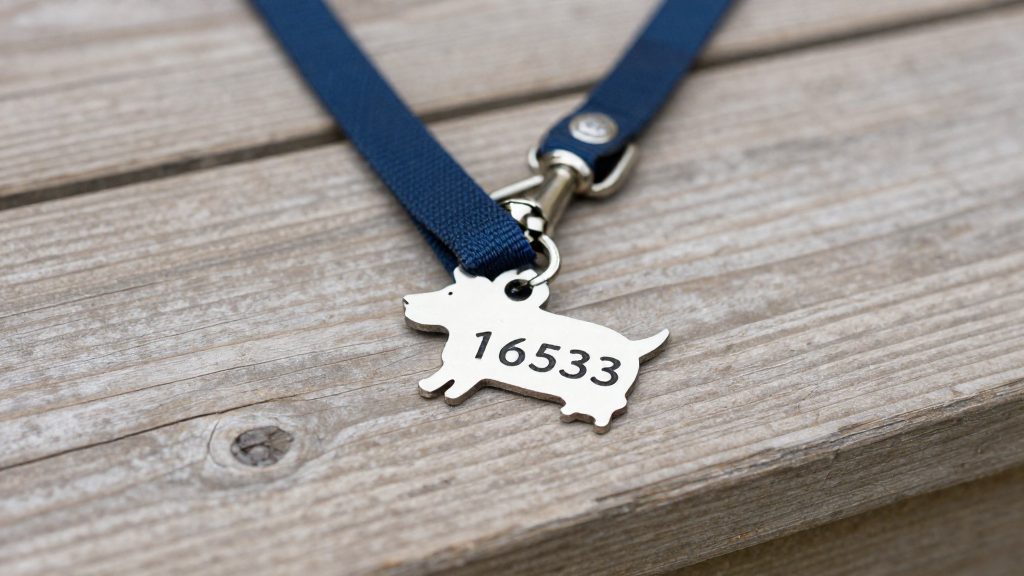
In New York City, if a dog has a license tag, you can search by license number on the city’s DogLicense site (NYC 311, 2026). The lookup depends on the tag being on the dog and the number being known. A dog without a tag cannot be found this way, so a license search is never a complete check.
| Tool | Requirement | Confirms | Cannot confirm |
|---|---|---|---|
| Flyer | Photo, contact number, one withheld detail | Whether a local finder recognises the dog and calls | Whether the dog has been taken to a shelter or seen elsewhere |
| Microchip | Registered, up-to-date owner details | Owner identity once a shelter or vet scans the chip | Whether anyone has scanned it |
| NYC DogLicense search | Dog wears a license tag; number is known | The license record linked to that tag number | Dogs without tags |
How long do shelters hold a stray dog?
Hold periods are set locally, so no single national rule applies. For an untagged dog, the figure that matters most is the point at which the facility may euthanize it. WebMD, citing ASPCA data, reports that some shelters may euthanize untagged animals after 48–72 hours, depending on the hold period that facility applies. This range is a risk indicator, not a fixed rule, so the only reliable figure is the one your local animal control or shelter confirms.
Timing risk for untagged dogs
An untagged dog has no license number or visible identification to speed up matching, so the facility has to work through its own intake records. Because some shelters may euthanize untagged animals after 48–72 hours, a report filed late may come after a decision has been made at some facilities. The practical step is to file the lost report on the same day you notice the dog is missing.
Returns are the minority outcome
WebMD, citing ASPCA data, says 15–30% of dogs entering U.S. shelters are returned to their owners. Most dogs that enter a shelter are therefore not returned to their owners, so act as soon as you notice your dog is missing.
Verifying the local hold period
Confirm the hold period with the facility itself rather than relying on general figures. Ask two questions when you call:
- How long are untagged dogs held before any decision is made?
- At what point could a held stray be euthanized?
What should I do after my dog is found?
Once a dog is found, the owner needs to confirm that the animal is theirs, close the open reports so that nobody keeps searching, and avoid payment fraud during the handover. In Washington, DC, DC Health advises owners to cancel the lost report as soon as the pet is found.
Confirm ownership in person
As practical advice, do not rely on a phone description alone. Go to the facility where the dog is held and ask staff to show you the animal. Compare it with the details you gave when you filed the report. If the dog has a microchip, ask for it to be scanned.
Document the match
Write down the date and time you confirmed the match, the facility’s name and address, the staff member’s name, and any reference or intake number they give you. Keep these notes with your report copy. If the match is disputed later, a dated record shows when and how ownership was confirmed.
Close every open report
Cancel each report you opened, including any shelter report and any online lost-pet listing you created. DC Health’s guidance is to cancel the report once the pet is found, which stops staff from continuing to search for an animal that is already home.
| Step | What it confirms | Source |
|---|---|---|
| Cancel the lost report | Ends the open search | DC Health, 2026 |
| Scan microchip and check registry | Links the dog to your contact details | WebMD, citing ASPCA data, 2026 |
Frequently asked questions
Which agency should I contact first for a lost dog?
Contact the agency that serves the place where the dog went missing, which may not be where you live. In Washington, DC, call (202) 888-PETS and file a Lost Report right away. In New York City, call 311 or 212-639-9675, or file a lost pet report in person at an ACC location.
How far from home should I search for shelters?
WebMD, citing ASPCA data, advises filing lost pet reports with shelters within 60 miles of home. The sources do not set a radius around the loss location, so as practical advice, also check facilities near where the dog was last seen.
How much time do I have before a shelter may act on an untagged dog?
Some shelters may euthanize untagged animals after 48–72 hours, depending on their hold period, so a report filed late may arrive after a decision has been made. Call the facility as soon as you notice your dog is missing and ask what its hold period is.