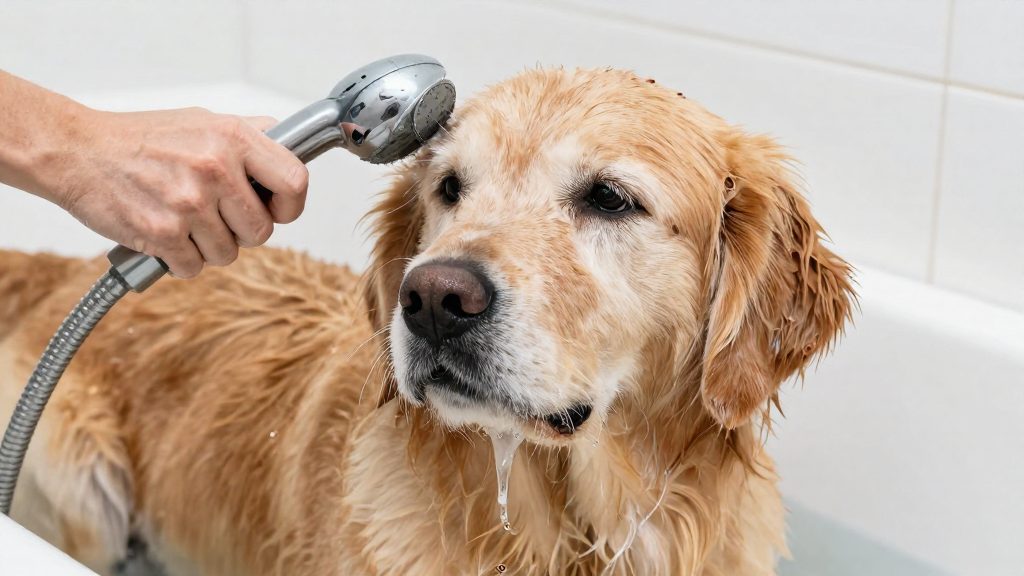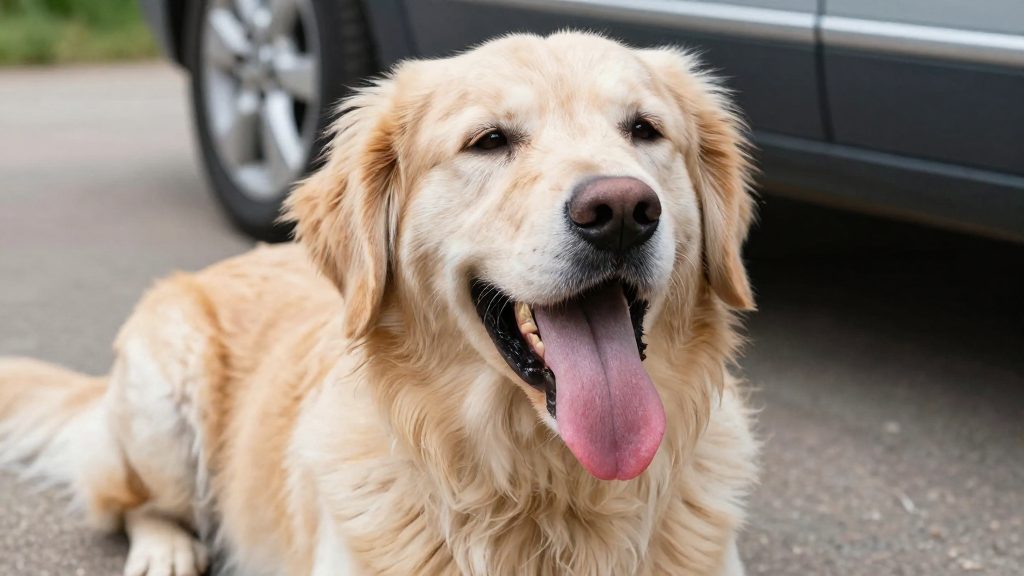
Heatstroke in dogs begins when body temperature reaches 105°F or higher, against a normal range of 100.5–102.5°F (Cornell University College of Veterinary Medicine, 2026). The milder signs that come before that point are excessive panting, a faster breathing rate, drooling, a faster heart rate, and mild weakness. The ASPCA lists these as signs of overheating, separate from its severe signs (ASPCA, 2026). Any of them in a dog exposed to heat or exertion is a reason to cool the dog and contact a veterinarian now, not after collapse.
Early signs of heatstroke in dogs
Milder signs and their sources
| Sign | Listed by | Note |
|---|---|---|
| Excessive panting or trouble breathing | ASPCA (2026) | Cornell (2026) lists “heavy panting” |
| Faster breathing rate | ASPCA (2026) | Listed together with a faster heart rate |
| Faster heart rate | ASPCA (2026) | Cornell does not list it; no numeric threshold is given in the source |
| Drooling | ASPCA (2026); Cornell (2026) | Listed by both sources |
| Mild weakness | ASPCA (2026) | Cornell lists “weakness” without the “mild” qualifier |
These signs are not diagnostic on their own. A dog can pant after play without overheating, so the combination of signs and the environment (heat, humidity, exertion, or a closed vehicle) matters.
Signs that mark the move to severe illness
The ASPCA separates the early group from a severe group: seizures, bloody diarrhea or vomit, and a body temperature above 104°F (ASPCA, 2026). Cornell also lists vomiting, confusion, and collapse among heatstroke signs (Cornell University College of Veterinary Medicine, 2026). If a dog with mild signs starts to show any of these, treat it as an emergency.
What to do when mild signs appear
- Move the dog out of the heat into shade or an air-conditioned space.
- Contact a veterinarian or emergency hospital.
Emergency signs: when to go to the vet now
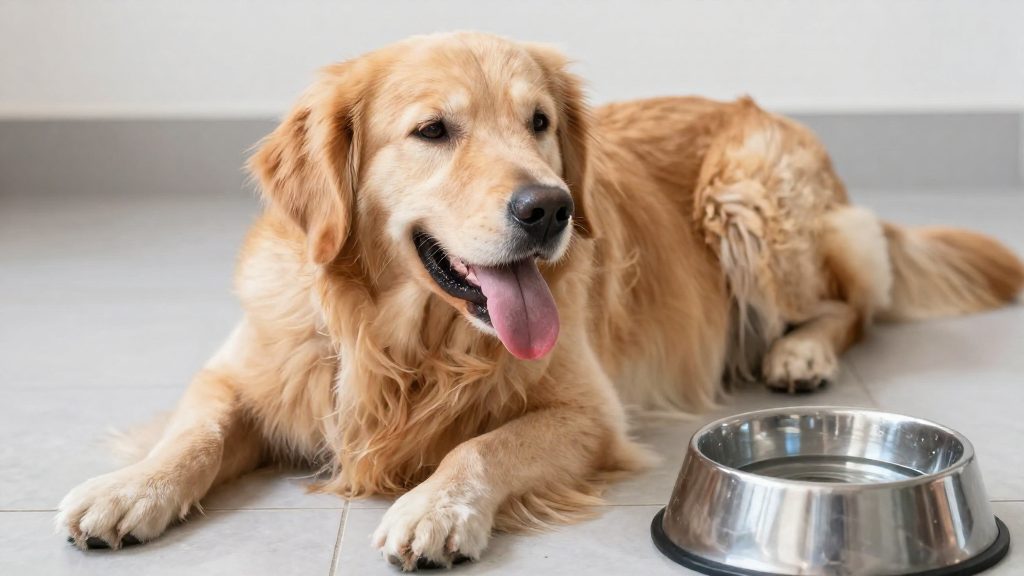
A dog showing any of the signs below during or after heat exposure needs a veterinary hospital immediately, not a wait-and-see approach. The ASPCA (2026) separates general overheating signs from severe ones. The severe signs are the clearest reasons to leave straight away.
Red-flag signs and their source classification
| Sign | Source classification |
|---|---|
| Vomiting | Listed by Cornell (2026) among heatstroke signs |
| Bloody vomit or bloody diarrhea | Listed as severe by the ASPCA (2026); bloody diarrhea also listed by Cornell (2026) |
| Seizures | Listed as severe by the ASPCA (2026) and by Cornell (2026) |
| Confusion or stupor | Confusion listed by Cornell (2026); stupor listed by the ASPCA (2026) |
| Collapse | Listed by Cornell (2026) and by the ASPCA (2026) |
| Body temperature above 104°F | Severe sign according to the ASPCA (2026) |
| Body temperature of 105°F or higher | Heatstroke threshold according to Cornell (2026) |
Temperature thresholds to compare against
The ASPCA (2026) treats a reading above 104°F as a severe sign, so a dog measured above that value should be taken to a veterinary hospital without delay, whether or not other symptoms are present. These figures are the sources’ Fahrenheit values and are not interchangeable with Celsius thresholds.
Is a high temperature always heatstroke?
No. A raised body temperature in a dog can have more than one cause, and heatstroke is only one of them. Cornell University College of Veterinary Medicine (2026) gives the reference points: a normal dog temperature falls between 100.5°F and 102.5°F, and heatstroke occurs when body temperature reaches 105°F or higher. A reading above the normal range but below 105°F does not meet Cornell’s heatstroke definition, but this is not reassurance: the ASPCA lists a reading above 104°F as a severe sign, and a high reading in a hot or exerted dog needs urgent veterinary assessment. The sources reviewed here do not give a separate threshold for fever, so a reading in that gap cannot be classified as fever on the basis of these figures alone.
| Body temperature | What it means | Source |
|---|---|---|
| 100.5–102.5°F | Normal range for a dog | Cornell, 2026 |
| Above 104°F | Listed by the ASPCA as a severe sign of overheating | ASPCA, 2026 |
| 105°F or higher | Heatstroke | Cornell, 2026 |
The two thresholds differ in source and purpose. Cornell defines heatstroke at 105°F, while the ASPCA lists a reading above 104°F among severe overheating signs. Both point to the same conclusion: a high reading in a dog that is hot, exerted, or confined in heat needs urgent assessment.
Fever and heatstroke differ in mechanism. Only a veterinary examination can establish whether a high reading comes from heatstroke or from another cause. The dog’s ability to shed heat is overwhelmed by external heat, humidity, or exertion, and temperature climbs. Because the cause differs, the same reading can point to different problems, and only a veterinary examination can establish which one applies.
What can I do on the way to the vet?
Cooling measures during transport are a bridge to veterinary care, not a replacement for it. Heatstroke is a medical emergency that needs immediate intensive critical care at a veterinary hospital, so the goal in the car is to lower the dog’s temperature gently while you drive there (Cornell University College of Veterinary Medicine, 2026). Two actions are recommended in the sources: wetting the dog with cool water and running the car’s air conditioning. Ice is the main thing to avoid.
Wetting the dog with cool water
Cornell advises wetting the dog with cool water while heading to the hospital (Cornell University College of Veterinary Medicine, 2026). VCA specifies cool, not cold water (VCA Animal Hospitals, 2024-02-21). The distinction matters: VCA advises cool, not cold, water.
Using the car’s air conditioning
Cornell recommends using the car’s air conditioning if possible (Cornell University College of Veterinary Medicine, 2026). Set the cabin to cool, and if you have a passenger, have them keep the dog’s wet coat in the airflow. If you are alone and cannot keep the dog cooled while driving, do not stop to improvise: continue to the nearest veterinary hospital.
Avoiding ice
VCA advises against ice because it can drop body temperature too fast (VCA Animal Hospitals, 2024-02-21). A rapid drop is itself a risk, so do not place ice packs on the dog, in the mouth, or under the coat, and do not add ice to the water used for wetting.

Which dogs are most at risk?
Cornell University College of Veterinary Medicine (2026) lists five groups of dogs at higher risk of heatstroke: short-muzzled breeds, older dogs, overweight dogs, thick- or dark-coated dogs, and dogs with respiratory or heart disease. Cornell also names external factors (heat and humidity, strenuous exercise, no shade or water, and being left in a car), so a higher-risk dog faces the most danger when these conditions combine. The source gives no percentages or incidence figures for these groups, so the comparison below is qualitative.
Short-muzzled breeds
Cornell names Pugs and Bulldogs as examples of short-muzzled breeds at higher risk. Heavy panting and drooling are on both Cornell’s and the ASPCA’s lists of overheating signs (Cornell University College of Veterinary Medicine, 2026; ASPCA, 2026). Owners of these breeds should recognise those two signs as reasons to cool the dog and call a vet promptly, rather than waiting to see whether they pass.
Older and overweight dogs
Cornell lists older dogs and overweight dogs as separate higher-risk groups. The source does not define an age or weight threshold, so neither can be stated as a number here. Owners should instead ask their vet to assess their dog’s age-related health and body condition before warm weather.
Dogs with heart or respiratory disease
Cornell lists dogs with respiratory or heart disease as higher-risk. The ASPCA includes faster heart and breathing rates and trouble breathing among its overheating signs (ASPCA, 2026). Because these signs overlap with a dog’s usual breathing and heart rate, owners should know their dog’s resting pattern before hot weather so that changes are easier to notice.
Should I wait if my dog seems better?
No. A dog that appears to recover from heatstroke still needs an immediate veterinary hospital assessment. VCA advises taking a dog with heatstroke to a veterinary hospital right away, even if it seems to recover (VCA Animal Hospitals, 2024-02-21). Heatstroke is defined by body temperature, and a dog that is panting less or moving around again does not show that its core temperature has returned to a safe range. Cornell describes heatstroke as a body temperature of 105°F or higher (Cornell University College of Veterinary Medicine, 2026), and that value cannot be checked by observing behaviour at home.
Decline can be sudden
VCA states that unconsciousness and death can follow quickly after heatstroke (VCA Animal Hospitals, 2024-02-21). A dog that looks stable can therefore deteriorate with little warning, and the window for effective treatment is not reliably predictable from outside.
Hot cars and summer safety
Environmental conditions are a direct route to heatstroke in dogs. Cornell University College of Veterinary Medicine (2026) lists heat and humidity, strenuous exercise, lack of shade or water, and being left in a car as the main environmental risks. Each of these can drive a dog’s body temperature to heatstroke levels, and they often combine on the same day.
Parked cars
The ASPCA states that leaving an animal in a parked vehicle can cause fatal heatstroke, and that doing so is illegal in several US states (ASPCA, 2026). The ASPCA does not name the states here, so check local and state rules wherever you travel. A dog should not be left in a parked car, even briefly or with the windows open.
Shade and fresh water
Cornell lists the absence of shade and of water as separate heatstroke risks (Cornell University College of Veterinary Medicine, 2026). Each one should be checked independently:
| Trigger | Cornell’s classification | Practical step |
|---|---|---|
| No shade | Heatstroke risk | Provide a shaded area the dog can move into during the day |
| No fresh water | Heatstroke risk | Keep fresh water available at all times, including when outdoors |
| Heat and humidity | Heatstroke risk | Check conditions before planning outdoor time |
Exercise during heat and humidity
Strenuous exercise is a listed trigger, and heat and humidity increase its effect (Cornell University College of Veterinary Medicine, 2026). For higher-risk dogs, reduce the intensity and duration of activity in hot or humid weather, and plan walks and games for cooler parts of the day.
Frequently asked questions
What should I do first if my dog seems overheated?
Move the dog into shade or an air-conditioned space, then contact a veterinarian right away, even if the dog seems to improve. VCA advises cool water, not ice, because very cold water can lower body temperature too quickly (VCA Animal Hospitals, 2024-02-21).
How can I tell heatstroke apart from normal panting after exercise?
Panting alone does not confirm heatstroke, so look at the whole picture: the heat or humidity, how hard the dog was working, and whether other signs are present. Severe signs such as vomiting, bloody diarrhea, confusion, seizures, or collapse mean the dog needs emergency care (Cornell University College of Veterinary Medicine, 2026; ASPCA, 2026).
Which dogs are most at risk of heatstroke?
Dogs with short muzzles, such as Pugs and Bulldogs, are at higher risk, as are older dogs, overweight dogs, dogs with thick or dark coats, and dogs with respiratory or heart disease (Cornell University College of Veterinary Medicine, 2026).