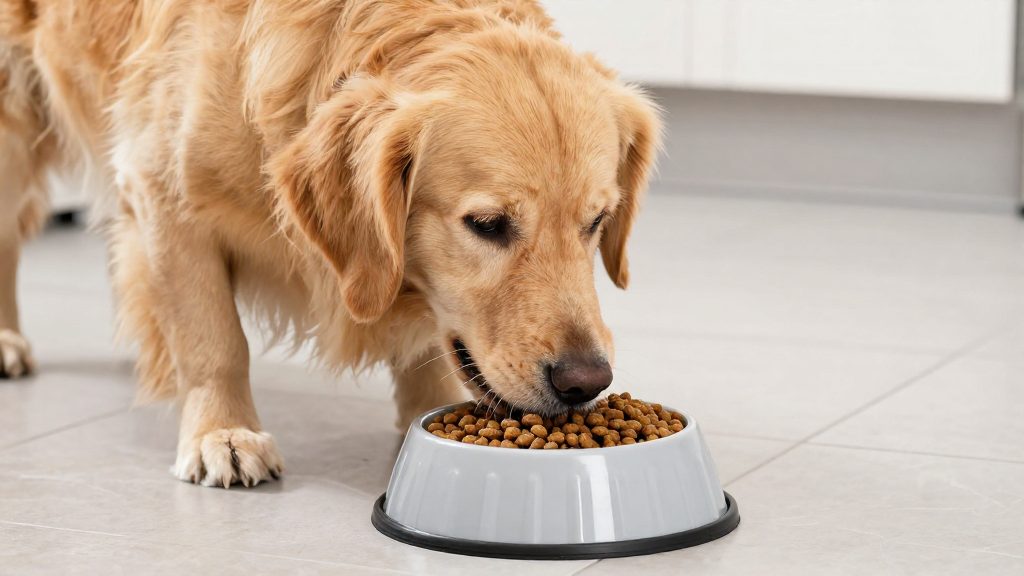
This article covers the ASPCA’s list of human foods toxic to dogs. It starts with three entries: macadamia nuts, alcohol and very salty foods. Macadamia nuts can cause weakness, incoordination, vomiting, tremors and hyperthermia, usually within 12 hours of ingestion, with recovery expected in 24 to 72 hours. Alcohol can cause breathing difficulty, coma and death, and very salty foods can cause increased thirst and urination before more serious signs develop. All figures below come from the ASPCA’s 2026 guidance on toxic foods.
Which human foods does the ASPCA say are toxic to dogs?
The table lists the signs the ASPCA associates with each food. The sections after it add timing and response details that are not repeated in the table.
| Food | Signs listed by the ASPCA (2026) |
|---|---|
| Macadamia nuts | Weakness, incoordination, vomiting, tremors, hyperthermia |
| Alcohol | Vomiting, incoordination, breathing difficulty, tremors, coma, death |
| Very salty foods | Increased thirst and urination, vomiting, diarrhea, tremors, seizures, death |
Macadamia nuts
The macadamia nut is the only food in this group with a documented onset and recovery window. The ASPCA states that symptoms usually appear within 12 hours of eating the nuts and that recovery is expected in 24 to 72 hours. Because the signs can be mistaken for general weakness or stumbling, note any nut exposure so the veterinarian knows what the dog ate and when.
Alcohol
The ASPCA lists vomiting, incoordination, breathing difficulty, tremors, coma and death among the effects of alcohol in dogs. Any alcoholic drink, including food containing alcohol, should be kept out of reach. If a dog has consumed alcohol and shows any of the listed signs, treat it as an emergency.
Very salty foods
Increased thirst and urination are the first signs the ASPCA lists for very salty foods. These can be easy to miss if the dog has access to water, so a sudden change in drinking or urinating habits after a salty snack is worth noting. Vomiting, diarrhea, tremors, seizures and death are the more severe signs listed in the same entry.

Chocolate and caffeine
Chocolate and caffeine sources are toxic to dogs because they contain methylxanthines. According to the ASPCA (2026), chocolate contains methylxanthines, and caffeine, including coffee, has the same toxic mechanism. Exposure can cause vomiting, diarrhea, panting, tremors, abnormal heart rhythm, seizures and death. Because caffeine works through the same mechanism, the hazard is not limited to chocolate.
Clinical signs to watch for
The ASPCA lists the following effects of methylxanthine exposure in dogs:
- Gastrointestinal: vomiting and diarrhea
- Respiratory: panting
- Neurological: tremors and seizures
- Cardiac: abnormal heart rhythm
Tremors, abnormal heart rhythm and seizures are the signs that point to a more serious systemic effect. A dog showing any of them needs veterinary attention without delay.
Risk by product
| Product | ASPCA classification | Source statement |
|---|---|---|
| Dark chocolate | Greater risk | Named among chocolate types carrying greater risk |
| Baking chocolate | Greater risk | Named among chocolate types carrying greater risk |
| Cocoa powder | Greater risk | Named among chocolate types carrying greater risk |
| Coffee and other caffeine sources | Same toxic mechanism | Caffeine is toxic through the same mechanism as chocolate |
The ASPCA entry names dark chocolate, baking chocolate and cocoa powder as carrying greater risk. It does not rank these three against each other, so no order among them should be assumed.
Xylitol: the hidden sweetener
Xylitol is a sugar substitute found in many everyday products, and the ASPCA lists it as toxic to dogs. The ASPCA links xylitol to two harms: low blood sugar (hypoglycemia) and possible liver damage. Early signs are vomiting, lethargy and loss of coordination, which can progress to seizures. Liver damage can occur within 12 to 24 hours. Xylitol can be present in products that do not look like risky foods.
Where xylitol is found
| Product type | Why it matters |
|---|---|
| Sugar-free gum | Listed by the ASPCA as a source of xylitol |
| Candy | Listed by the ASPCA as a source of xylitol |
| Baked goods | Listed by the ASPCA as a source of xylitol |
| Toothpaste | Listed by the ASPCA as a source of xylitol |
Dogs may reach these products from a bag, a purse, a counter or a bathroom shelf.
Blood sugar and liver risks
The fact sheet records the two outcomes, low blood sugar and possible liver damage, but does not describe the biological pathway behind them. What is documented is the sequence of effects an owner might observe.
Symptom progression
| Stage | Reported signs | Timing |
|---|---|---|
| Early | Vomiting, lethargy, loss of coordination | Not specified in the source |
| Advanced | Seizures | Not specified in the source |
| Liver injury | Possible liver damage | Within 12 to 24 hours |
The early signs can look like a mild stomach upset or tiredness. A dog that may have eaten a xylitol-containing product should be assessed by a veterinarian or poison control right away, even if it seems to recover.
Grapes, raisins, onions and garlic
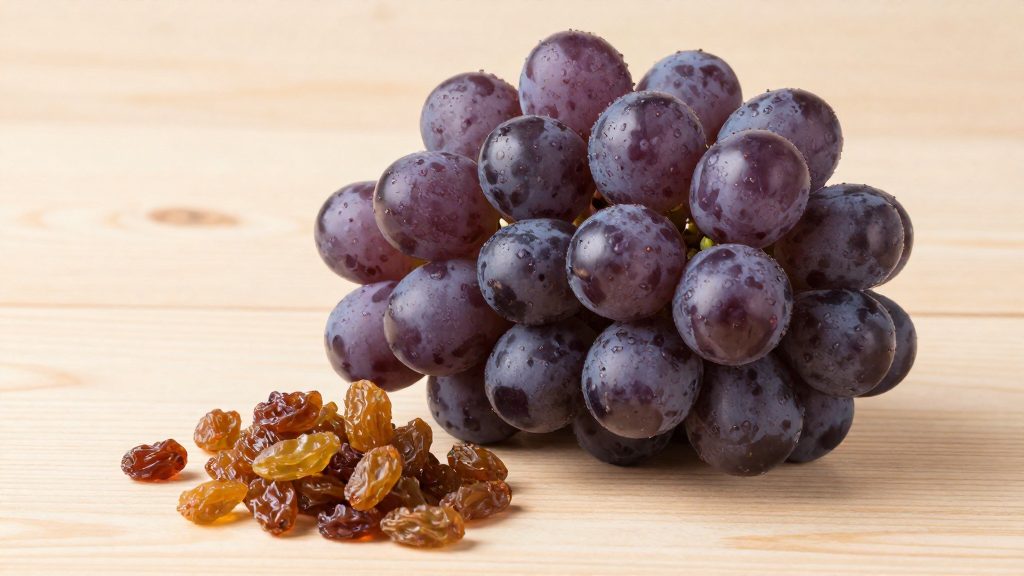
Grapes and raisins target the kidneys, while onions, garlic and chives target the digestive tract and the blood. The ASPCA (2026) lists grapes and raisins as a cause of kidney damage in dogs. It lists onions, garlic and chives as causes of gastrointestinal irritation and red blood cell damage that may lead to anemia. The two groups act through different mechanisms, so a dog that eats one group is not protected from the other.
| Food | Body system affected | Documented effect in dogs (ASPCA, 2026) |
|---|---|---|
| Grapes, raisins | Kidneys | Kidney damage |
| Onions, garlic, chives | Digestive tract | Gastrointestinal irritation |
| Onions, garlic, chives | Blood | Red blood cell damage, which may lead to anemia |
Grapes and raisins
Fresh grapes and raisins (dried grapes) are both on the ASPCA list. The kidney damage they cause is the main concern, and the fact sheet does not list early symptoms specific to grapes. Kidney injury cannot be confirmed by looking at the dog.
Onions, garlic and chives
These three plants share the same documented effects. Their first visible impact is gastrointestinal irritation. The more serious effect is red blood cell damage. Damaged red blood cells can lead to anemia, a shortage of healthy red blood cells that the body needs to carry oxygen. The ASPCA entry does not list the specific signs of anemia, so a veterinarian must confirm it through testing, not through observation at home.
Is avocado toxic to dogs?
This article does not cover avocado. If your dog has eaten it, contact your veterinarian or the ASPCA Animal Poison Control Center at (888) 426-4435.
Verification status of the avocado question
| Claim to check | Status in the fact sheet | Required action |
|---|---|---|
| ASPCA lists avocado as toxic to dogs | Not stated | Check the ASPCA toxic plant listing and record the exact wording |
| Specific plant parts named by the ASPCA | Not stated | Quote only the parts the listing names; if none are named, say so |
| Date of the ASPCA entry | Not stated | Note the page’s date or last-updated field, plus your access date |
| Risk to birds | Not stated | Find a separate, species-specific source for birds |
| Risk to other pets (cats, rabbits, reptiles, fish) | Not stated | Source each species separately; do not extend the dog finding to them |
Handling birds and other pets
A dog-specific entry does not establish risk for birds or other companion animals. Each species needs its own citation, ideally from a veterinary or poison-control source that names that species. Until such a source is found, the article should state that the risk for that species is unverified.
What should you do if your dog eats something toxic?
Once you suspect your dog has eaten a toxic food, the first priority is containment and information, not treatment. Stop further access, keep your dog calm, and collect the details that a veterinarian or poison control specialist will need to assess the exposure. These steps take a few minutes and can be done before you make contact.
Secure the dog and the area
- Move your dog to a room you can watch, and close off the kitchen, bins, and cupboards it could reopen.
- Remove the rest of the food from reach, including pieces dropped on the floor or left on a counter.
- Keep the packaging, such as gum wrappers, candy boxes, baking bags, and toothpaste tubes. The ingredient list shows whether the product contains a known toxin like xylitol, which the ASPCA lists as toxic and which is found in gum, candy, baked goods, and toothpaste.
Record the exposure details
Write these details down before you call for advice. Each one helps the professional judge the risk.
| Detail to record | Why it matters |
|---|---|
| Product name and ingredient list | Identifies the specific toxin, since the same type of food can differ in composition |
| Estimated amount eaten | Lets the professional compare the quantity with your dog’s size |
| Dog’s weight, in pounds (lb) | Needed to relate the estimated amount to body weight |
| Time of ingestion | Establishes how long ago the exposure occurred |
| Any other items eaten or possibly eaten | Prevents a second toxin from being missed |
Estimates are acceptable if you are unsure. Note how confident you are in each figure rather than leaving the field blank.
Do not induce vomiting
Do not make your dog vomit, and do not give any home remedy, unless a veterinarian or poison control professional instructs you to. Whether vomiting is safe depends on what was eaten and how much, so that decision belongs to the professional who has the details you have just recorded.
When to call a vet or poison control
If your dog has eaten a food on the ASPCA toxic list and shows any sign of poisoning, call a veterinarian or the ASPCA Animal Poison Control Center at (888) 426-4435. Call as soon as you suspect exposure, whether or not signs have appeared, and tell the responder about any signs you see.
Emergency triggers
Contact a vet or the poison line immediately if you see any of these signs:
| Sign | Listed in the ASPCA fact sheet for |
|---|---|
| Seizures | Xylitol, chocolate |
| Tremors | Chocolate, alcohol |
| Coma | Alcohol |
| Breathing difficulty | Alcohol |
These signs indicate a serious systemic effect. Do not wait to see whether they improve on their own.
Non-emergency contact
When signs are mild or absent, still call. The fact sheet lists vomiting and diarrhea among the signs of chocolate and very salty food toxicity. When these are the only signs, a veterinarian or the poison line can advise whether your dog needs to be examined, rather than assuming they are minor.
The absence of symptoms is also not a reason to skip the call. The ASPCA fact sheet describes vomiting, lethargy and loss of coordination as early signs of xylitol toxicity, and these can progress to seizures. Early signs therefore justify contact even when they seem mild.
What to report on the call
Have the following information ready so the person you reach can assess your dog quickly:
- The signs you are seeing now, and when you first noticed them
- Whether your dog is breathing normally and is responsive
- Whether your dog can stand and walk
- Your dog’s current weight and general health, if known
Frequently asked questions
What should I do if my dog eats one of these foods?
Contact your veterinarian or the ASPCA Animal Poison Control Center at (888) 426-4435 right away, and note what the dog ate and roughly when (ASPCA, 2026). Do not induce vomiting unless a veterinarian or poison control specialist tells you to, because some substances cause more harm when brought back up.
Is xylitol on the ASPCA list, and why does it matter?
Yes. The ASPCA lists xylitol, a sugar substitute found in gum, candy, baked goods and some toothpaste, as toxic to dogs. It can cause low blood sugar and possibly liver damage, and liver damage can occur within 12 to 24 hours of ingestion (ASPCA, 2026).
Are coffee and caffeine as dangerous to dogs as chocolate?
Caffeine, including coffee, works through the same mechanism as chocolate, which contains methylxanthines that the ASPCA identifies as the toxic agents (ASPCA, 2026). Dark chocolate, baking chocolate and cocoa powder carry a greater risk than milk chocolate because they contain more of these compounds.