The minimum is one full physical examination per year. The 2021 American Animal Hospital Association (AAHA) and American Association of Feline Practitioners (AAFP) task force sets this as the baseline for cats at every life stage. It is a floor, not a ceiling: the task force also recommends more frequent visits when a cat’s individual needs call for them.
How often should a cat have a vet checkup?
What the 2021 minimum requires
The AAHA/AAFP task force recommends a minimum of one full physical exam a year. A full physical exam is a complete hands-on assessment by a veterinarian, as opposed to a brief visit for a single complaint. The 2021 guidance applies this minimum to all adult cats, so a cat that appears healthy still needs its yearly exam.
Why the minimum applies at every life stage
Cats often hide illness, which is why the task force ties the minimum to scheduled examinations rather than to owners noticing symptoms. Life-stage-specific intervals for kittens and seniors are covered separately in this guide.
When individual needs call for more visits
The task force states that individual needs can justify more frequent visits than the minimum. The guidance does not assign fixed intervals to these situations, so the decision rests on the cat’s circumstances and your veterinarian’s judgement. Factors worth raising at your appointment include:
- A diagnosed condition that requires monitoring
- Ongoing medication that needs follow-up
- A recent illness, injury or surgery
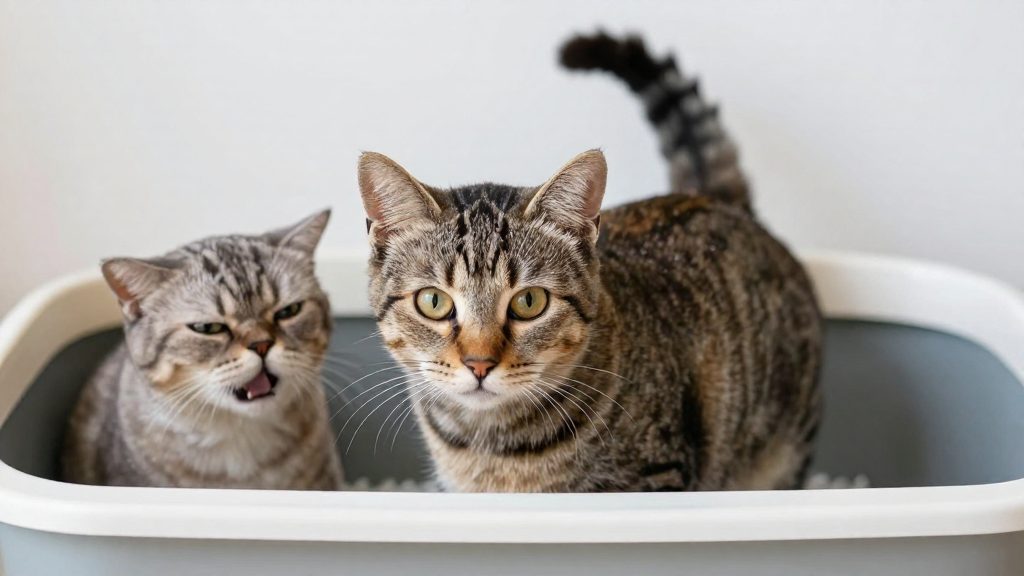
- A change in appetite, weight, drinking or litter-box habits
- Any new household situation that could affect the cat’s health
Your vet can set a recall schedule that fits the cat.
Kitten visits in the first year
A kitten needs more vet visits than an adult cat during its first year, and the timing follows the vaccination series rather than a fixed calendar interval. Your vet sets the spacing between doses and the date of each booster, so the number of visits in year one depends on that individual plan and cannot be known in advance. Working through its vaccines is what makes a kitten’s first-year visit count higher than the single yearly exam that suits a healthy adult.
How the visit plan is set
The vet builds the schedule at the first appointment. The plan depends on the kitten’s age and health, along with the vaccines recommended for your region. Visits are then booked to the dates the vet specifies, not to a monthly routine chosen by the owner.
- First appointment: the vet records the kitten’s history and sets the vaccine dates.
- Series visits: each dose falls at the interval the vet has specified for that product and the kitten’s age.
- Between doses: if a dose is missed or rescheduled, ask the vet how to resume the series rather than restarting it on your own.
Spay or neuter timing
Growth-stage appointments are the usual point to raise spay or neuter timing with your vet. The fact sheet gives no age threshold, so the recommended age is a question for your vet, who weighs the kitten’s development and your household situation. At that visit, ask:
- the recommended age for the procedure in your area;
- what the procedure involves for a kitten of that age;
- which post-operative checks the vet schedules afterward.
Closing the kitten phase
Once the vaccination series is complete, the visit pattern changes. Ask the vet at the final kitten appointment when the next routine exam is due, and note the date in the kitten’s record.
Checkups for healthy adult cats
For many years, veterinary guidance split adult cats at age seven. The 2010 AAFP/AAHA guidelines advised yearly checkups for healthy cats under 7 and twice-yearly checkups for cats 7 and older (dvm360, 2010-02-01). That age-based schedule is now superseded. The 2021 AAHA/AAFP task force replaced the 2010 seven-year cutoff, but it still advises that senior cats be seen at least every six months. The AAFP Senior Care Guidelines (2021) add age-based intervals for cats aged 10 and older.
| Age band | 2010 AAFP/AAHA guidance | 2021 AAHA/AAFP task force |
|---|---|---|
| Under 7 | Yearly checkup | At least one full physical exam a year |
| 7 and older | Twice-yearly checkup | Seniors: at least every six months (AAHA/AAFP 2021); AAFP 2021 gives specific intervals from age 10 |
The practical change is that the individual health profile now drives the schedule, not a birthday. A healthy 4-year-old cat falls under the yearly baseline. Senior cats are advised at least six-monthly exams, so ask your vet which interval applies to your cat.
What to do with this information:
- Book at least one visit per year for a healthy adult cat, and at least every six months once the cat is a senior.
- Ask the vet to set a different interval if the cat has a diagnosed condition or is on long-term treatment.
- Be cautious with older articles or forum posts that quote the seven-year twice-yearly rule. Check the publication date; that rule comes from the 2010 guidance.
How often should senior cats see the vet?
Senior cats should be seen at least every six months, according to the 2021 AAHA/AAFP task force. The AAFP Senior Care Guidelines, also 2021, set shorter intervals as cats age. Cats aged 10 to 15 should have a checkup at least every six months, and healthy cats over 15 should have an exam about every four months.
| Age band | Recommended interval | Source |
|---|---|---|
| Any life stage | At least one full physical exam per year | AAHA/AAFP task force, 2021 |
| Seniors (AAHA) | At least every six months | AAHA/AAFP task force, 2021 |
| Cats aged 10 to 15 | At least every six months | AAFP Senior Care Guidelines, 2021 |
| Healthy cats over 15 | About every four months | AAFP Senior Care Guidelines, 2021 |
The interval shortens with age because the AAFP guidance treats the over-15 group differently from the 10-to-15 group.
The schedule has changed over time. The 2010 AAFP/AAHA guidelines, reported by dvm360 on 2010-02-01, advised yearly checkups for healthy cats under 7 and twice-yearly checkups for cats 7 and older. The 2021 update replaced that scheme, so older articles and clinic handouts may still show the 2010 cutoffs.
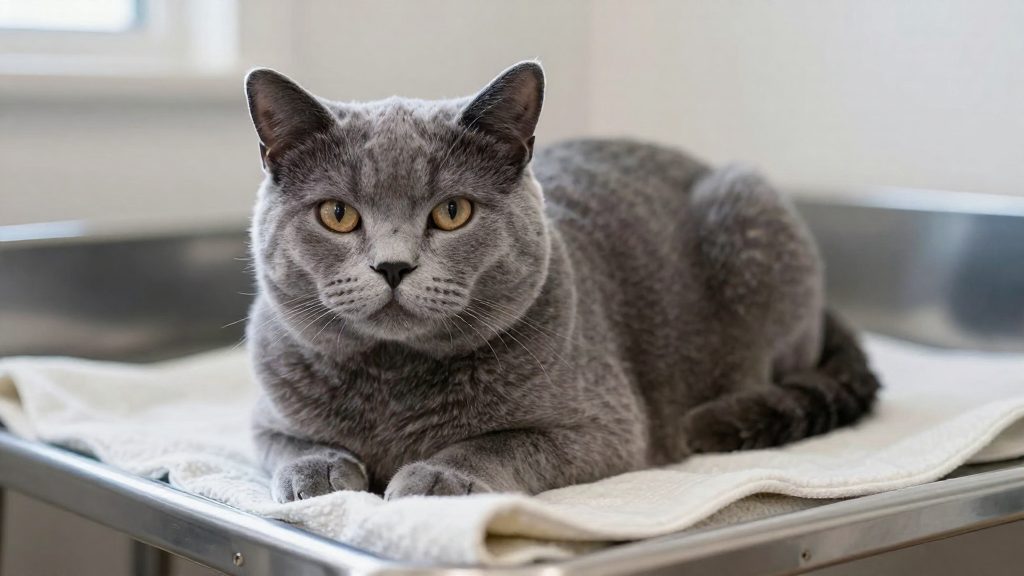
Why cats need exams even when they seem fine
Cats often hide illness. An apparently healthy cat can be carrying a disease that has not yet produced any change an owner would notice, which is why routine exams exist as a separate step from visits prompted by symptoms. The exam is the point where a veterinarian can detect problems the owner cannot see.
Cats hide pain and illness
In the wild, a visibly weak animal is an easy target, so cats tend to mask pain, discomfort and early illness. A cat that is still eating, grooming and moving around may be hiding a problem that has already started. By the time the owner sees clear signs of illness, the condition may have been developing for some time. Because the cat’s behaviour does not reliably reveal how it feels, the owner’s observations at home are an incomplete picture.
Subclinical disease gives no visible signs yet
Subclinical disease is a condition that has begun but does not yet cause obvious symptoms. Many conditions in cats follow this pattern. A physical exam, and the diagnostic tests a veterinarian may choose to run, can identify changes that the owner would not detect at home. The value of a routine exam lies in catching these early changes, while treatment options may still be broader.
Exams track weight and body condition
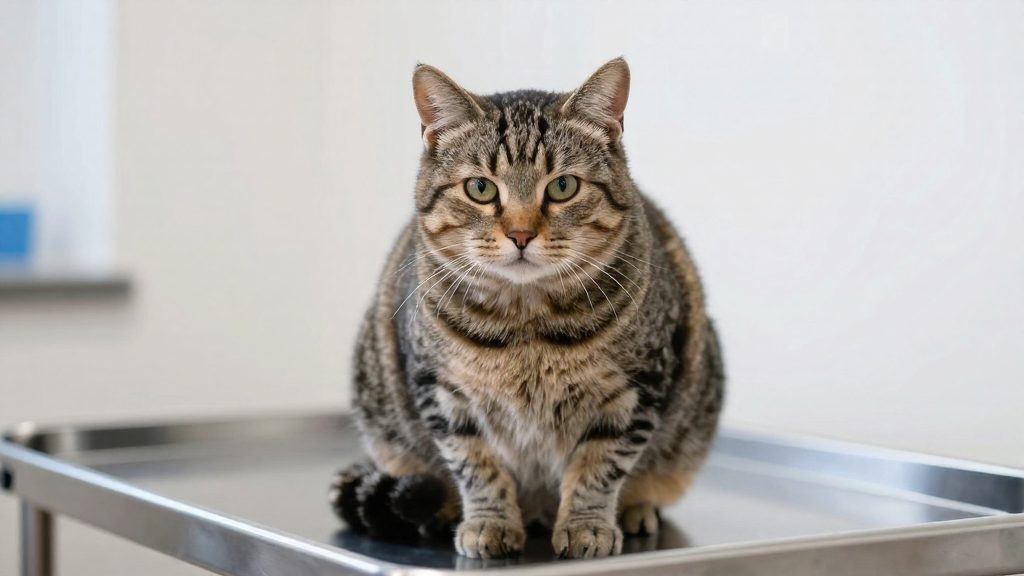
Weight is one of the most useful signals a veterinarian can track over time, and it is hard to judge accurately at home. Gradual loss or gain can go unnoticed because each change is small. Weighing the cat at each visit creates a record that makes trends visible. Veterinarians also assess body condition by feeling the ribs, spine and hip area and by looking at the waist and abdomen. This assessment can show changes that a scale alone does not.
| What changes | Why owners often miss it | What the exam adds |
|---|---|---|
| Gradual weight loss or gain | Small steps are hard to notice day to day | Weight recorded at the same point each visit, allowing trend comparison |
| Shifts in body condition | Fur hides the shape of the body | Hands-on assessment of ribs, spine and abdomen |
| Early dental or oral changes | Cats often hide mouth discomfort | Direct examination of the mouth and teeth |
Signs your cat needs a vet sooner
A cat showing any of the signs below should see a vet before its next scheduled checkup. The AAFP Senior Care Guidelines state that cats with chronic conditions need more frequent visits, depending on severity, so a worsening known condition is a reason to call early.
Changes in eating, drinking, and litter box habits
A sustained drop in appetite, a noticeable increase in drinking, or a change in how often a cat urinates or defecates should be reported. Litter box changes are often the first visible sign, because a cat may stop using the box or strain without any other obvious symptom. Straining with little or no urine output is an emergency and needs immediate veterinary care. Blood in the urine needs urgent veterinary care, as the table below shows. Blood in the stool or urinating outside the box warrants contacting a vet promptly, ideally the same day. Keep a simple log of food intake, water, and litter box visits, so the vet receives concrete information rather than a general impression.
Labored or open-mouth breathing, and persistent coughing
Breathing that looks effortful, with visible abdominal movement, fast breathing at rest, or an open mouth is an emergency sign in cats. Open-mouth breathing is not normal feline behaviour and needs immediate veterinary care rather than a booked appointment. Coughing or wheezing that persists or keeps returning also justifies prompt contact. When calling, report whether the breathing happens at rest or after activity, and whether the gums look pale or blue.
Hiding, lethargy, and sudden withdrawal
A cat that plays less, sleeps more than usual, stops grooming, or avoids its usual perch or people has changed from its baseline. Sudden withdrawal is more urgent than gradual change, because it points to an acute problem. Judge changes against the cat’s own normal behaviour, since a naturally quiet cat differs from one that has become withdrawn.
| Sign | Book a vet visit soon | Seek urgent care now |
|---|---|---|
| Eating or drinking | Gradual change in appetite or water intake | Not eating while visibly weak |
| Litter box | Changed frequency or consistency | Straining with little or no urine, or blood in urine |
| Breathing | Cough that persists or keeps returning | Open-mouth or labored breathing, pale or blue gums |
| Behaviour | Gradual loss of interest, less grooming | Sudden collapse-like weakness or abrupt withdrawal |
What happens at a wellness exam?
A routine feline wellness exam follows a consistent sequence: the veterinarian takes a history, examines the cat from head to tail, listens to the heart and lungs, checks the mouth, reviews parasite control, and records the findings. The history shapes what the examiner looks for, and each finding is compared with previous visits. The steps below describe the procedure itself. Durations and clinic protocols vary, so this section does not assign times or thresholds to them.
History intake
Before handling the cat, the vet asks the owner about:
- Diet: the food brand and type, whether it is commercial or home-prepared, and the treats given.
- Access: indoor only, indoor with supervised outdoor time, or free-roaming. Outdoor access changes which parasites and injuries the vet will consider.
- Prior illness: past diagnoses, surgeries, and medications, plus any recent change in appetite, drinking, litter box use, or behaviour.
Physical examination, head to tail
The vet performs palpation in a fixed order: eyes and ears, mouth and throat, lymph nodes under the jaw and at the shoulders and hind legs, neck, chest wall, abdomen, skin and coat, limbs and joints, and the tail and perianal area. In the abdomen, the vet feels the size of internal organs and checks for masses or pain. Skin is checked for lumps, wounds, hair loss, and debris from fleas.
Heart and lung auscultation
The vet places a stethoscope on the left and right chest to assess heart rate, rhythm, and any murmur, then listens to each lung field for abnormal breath sounds such as crackles or reduced airflow. A calm, gently restrained cat makes this step more reliable.
Dental and oral examination
The vet lifts the lips and examines the gums for colour and inflammation, the teeth for tartar, loose teeth, or fractures, and the tongue and palate for sores or swelling. Signs of tooth resorption, a painful condition in cats, are checked specifically.
Parasite review
The vet asks which flea, tick, and intestinal worm controls are used and when they were last given, then checks the coat and skin for fleas, flea dirt, or ticks. A stool sample may be requested where indicated.
Records kept
The medical record holds the history, findings for each body system, parasite-control entries with product names and dates, and any abnormal finding flagged for recheck. The record is the baseline the next visit is compared against. You can ask the clinic about getting a copy; rules vary by state.
Frequently asked questions
How often does a healthy adult cat need a vet checkup?
A healthy adult cat needs at least one full physical examination each year, according to the 2021 AAHA/AAFP task force. Your vet may recommend more frequent visits if your cat’s individual needs call for them.
Does an older cat need to go more often than once a year?
Yes. The 2021 AAHA/AAFP guidance advises that senior cats be seen at least every six months, and the AAFP Senior Care Guidelines (2021) suggest about every four months for healthy cats over 15. The age-7 cutoff from the 2010 guidelines no longer applies, so the age-based schedule now starts from the senior guidance.
What signs mean I should contact a vet before the next checkup?
Straining to urinate with little or no urine is an emergency that needs immediate veterinary care, and blood in the urine also needs urgent attention. Blood in the stool or urinating outside the litter box warrants calling your vet promptly, ideally the same day.