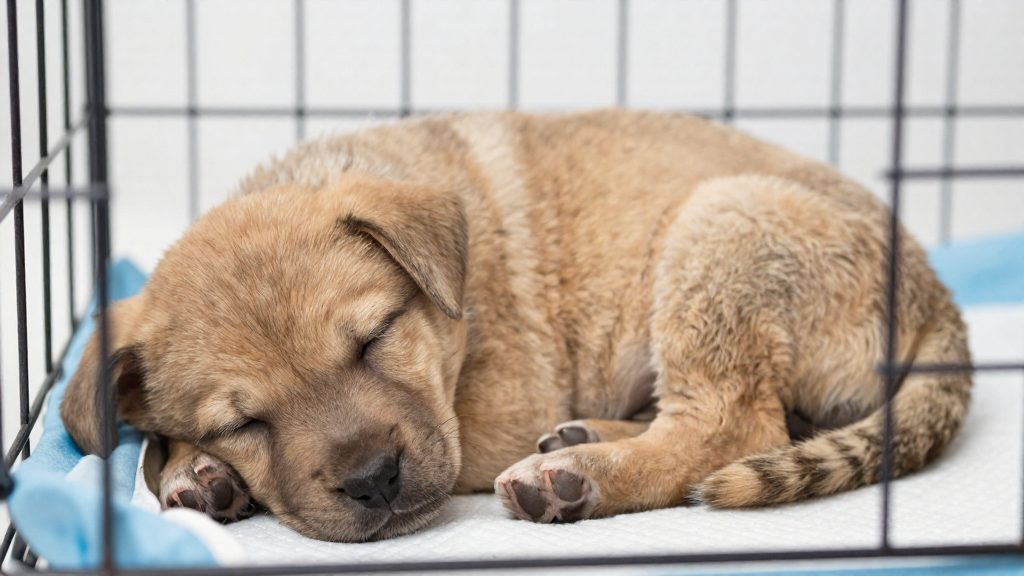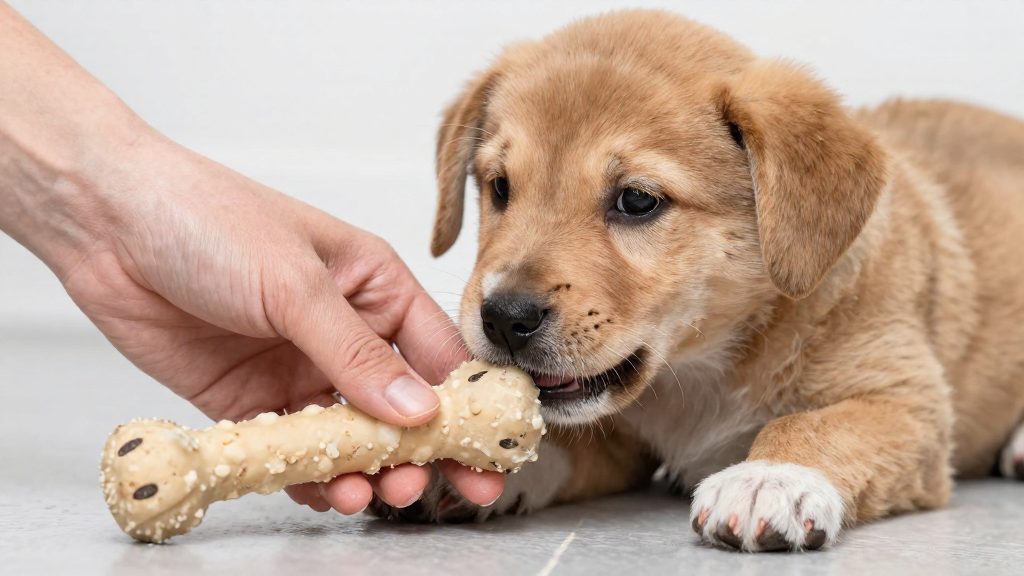
Puppies bite mainly because their mouths are their first tool for exploring the world and for play. The same habit becomes a bigger problem as the puppy grows, so understanding its sensory and play roots helps owners respond accurately and at the right age.
Why do puppies bite?
The mouth as the primary exploration tool
A young puppy investigates objects with its mouth before, or alongside, using its paws. Mouthing gives the puppy information about an object’s size, shape and firmness, so a nip is often a form of inspection rather than an intention to hurt. Because the mouth is so central to how a puppy learns, many puppies mouth nearly everything within reach, including hands, feet, clothing and furniture legs.
Sensory exploration through taste, texture and pressure
Each object gives the puppy a different sensory input. Taste tells it whether something is worth keeping, texture indicates whether it is soft, hard or moving, and pressure from the jaws shows how the object responds when squeezed. A hand or sleeve can provide all three at once, which is why people’s bodies become frequent targets. Offering objects with clearly different textures lets the puppy explore without directing that curiosity at people.
Play drive and quick movements
Play is the second main driver. Puppies play with their mouths, and fast movement of hands, feet, trailing clothing or a moving tail can trigger chase and grab responses. Nips that happen during these bursts of activity are typically part of play.
Play bites differ from aggression.
Is puppy biting normal?
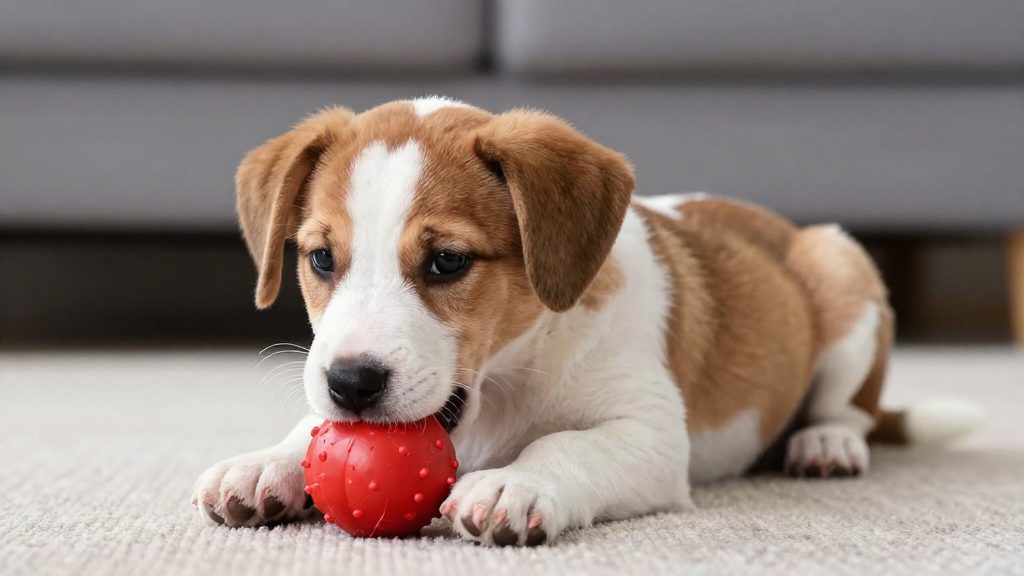
Yes. Puppies use their mouths to explore and play, and biting is normal puppy behavior (ASPCA, 2026). What matters is how hard the puppy bites, how often, and how old it is. The ASPCA notes that a nip from a 7-week-old seems cute, while the same habit at 3–4 months is much less so (ASPCA, 2026). The behavior itself has not changed. The owner’s tolerance and the puppy’s physical capacity have.
Age baseline: 7 weeks versus 3–4 months
| Age | Mouthing as described by the ASPCA | Typical owner response |
|---|---|---|
| 7 weeks | Nipping during exploration and play | Seen as cute |
| 3–4 months | The same habit, now a bigger problem | Much less acceptable |
Why tolerance drops as the puppy grows
The ASPCA states that biting “becomes a bigger problem as the puppy grows” (ASPCA, 2026). The source gives no measurement for this change. The practical reason is that a larger, stronger puppy delivers more force with the same jaw action, so a bite that was harmless at seven weeks can cause real pain at four months. Judge each bite against the puppy’s current size, not the size it had when the habit began.
Escalation pattern: from nips to harder bites
Bite inhibition is a dog’s ability to control how hard it mouths. Puppies learn it mostly from littermates, who yelp and stop playing when bitten too hard (ASPCA, 2026). The AKC gives the same account, noting that puppies learn bite inhibition from their mother and littermates (American Kennel Club, 2024-04-03). The sources give no age at which bites become harder, so track the force of each bite rather than relying on a calendar date.
Teething and play: what’s behind the nipping
Puppy mouthing has two distinct sources, and each calls for a different response. Teething chewing is driven by the physical changes in the mouth. Play-driven nipping is driven by excitement and the puppy’s drive to explore and interact. The American Kennel Club adds that teething makes chewing a normal part of development. The table below sets out the cues that help you tell the two apart.
| Cue | Teething chewing | Play-driven nipping |
|---|---|---|
| Target | Objects, such as furniture, shoes or chew toys | Hands, feet, sleeves or pant legs |
| Context | Often when the puppy is alone or settled | During games, greetings or heightened excitement |
| Interaction | Happens without you moving or engaging | Rises as the activity or your movement increases |
Teething chewing and chew toy selection
When the puppy gnaws on objects without any interaction from you, teething is the more likely driver. The AKC recommends giving safe chew toys for this purpose. Give the puppy safe chew toys and keep several toys available so it has approved items to work on.
Play-driven nipping during games and excitement
Nipping that spikes during tug, chase or greeting is play-driven. The puppy is not chewing to relieve discomfort. It is using its mouth as part of the game. Because the behavior is tied to arousal, the level of activity matters: a puppy that is already highly stimulated is more likely to mouth hands. Regular, calmer play sessions reduce the peaks of excitement that trigger this type of nipping.
Structured play with vaccinated dogs and puppy classes
Structured play gives the puppy appropriate partners for mouthing. The ASPCA recommends structured play with other vaccinated dogs, and suggests puppy classes. The AKC specifically suggests considering an AKC S.T.A.R. Puppy class. In a class or a controlled playdate, the puppy practices play with other dogs and learns from their responses.
How to stop puppy biting
The core method has three parts: redirect the bite to a toy, freeze your hands or feet when nipping begins, and reward the puppy as soon as the biting stops. The ASPCA advises this sequence for puppy nipping. The method works by giving the mouth an acceptable target and marking the exact moment the behaviour is wanted.
Redirect the bite to a toy
When the puppy mouths your hand, skin or clothing, offer a toy it is allowed to bite instead. The switch needs to happen at once, so keep one or two appropriate toys within reach during play. Once the puppy takes the toy, let it keep chewing that toy rather than returning to your body.
Freeze when nipping starts
When the puppy nips, freeze your hands or feet. The ASPCA recommends this because it stops the active play that the puppy is responding to. Keep your body still and wait for the puppy to lose interest or move to the toy. Do not restart the game until the mouth is no longer on you.
Reward the moment biting stops
Give a reward as soon as the puppy stops biting, whether it releases your hand, takes the toy or simply stays calm. The ASPCA advises rewarding the puppy once it stops, and the AKC recommends rewarding gentle play. Timing matters: a reward given several seconds after the bite ends does not clearly mark which behaviour earned it.
Sequence at a glance
| Step | What you do | Purpose |
|---|---|---|
| 1. Nip begins | Freeze hands or feet and keep still | Pauses the game |
| 2. Redirect | Offer an appropriate chew toy | Gives the mouth a permitted target |
| 3. Biting stops | Reward immediately | Marks the desired behaviour |
What not to do when your puppy bites
Three common reactions to a nipping puppy make the problem worse: slapping or hitting, scruff-shaking, and jerking your hand away. The ASPCA (2026) advises against all three because they can increase biting or cause fear. Each response teaches the wrong lesson. It either turns play into a contest or adds stress, and it does not show the puppy which kind of mouthing is acceptable.
| Reaction | Risk named in the source | Why it backfires |
|---|---|---|
| Slapping or hitting | Can increase biting (ASPCA, 2026) | The response can raise arousal instead of teaching gentle mouthing. |
| Scruff-shaking | Can cause fear (ASPCA, 2026) | Restraining the puppy by the loose neck skin is physical control, not teaching. A frightened puppy may come to distrust handling. |
| Jerking your hand away | Can increase biting (ASPCA, 2026) | A sudden movement gives the puppy a moving target to chase and grab. |
Physical punishment does not build bite control.
Scruff-shaking can cause fear, according to the ASPCA. A puppy that is scared during play has less chance to learn gentle mouthing.
For the hand-withdrawal problem, the AKC (2024-04-03) recommends pulling back from play rather than jerking the hand away. The motion is the key difference: a controlled withdrawal ends the game without giving the puppy a new target.
Teach bite inhibition step by step
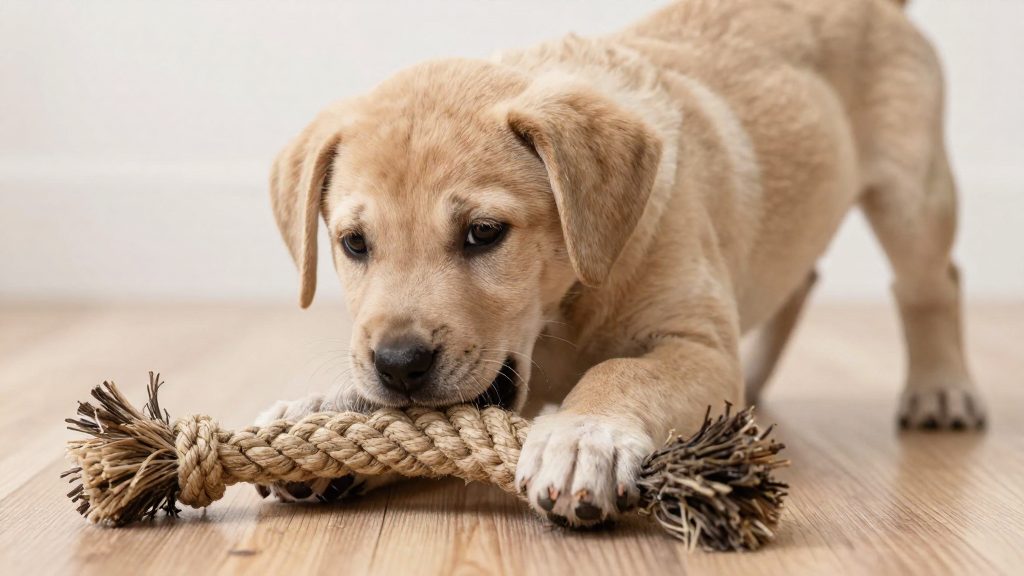
The aim is not to end mouthing but to require gentler play until the puppy barely applies any pressure, so start early.
Littermate lessons on bite force control
Littermates give immediate, predictable feedback. A bite that hurts ends the game. Your role is to reproduce that feedback consistently, so the puppy connects its own bite pressure with the end of play.
Yelping and pausing play after hard bites
Use this sequence each time a bite goes beyond gentle mouthing:
| Step | Action | Purpose |
|---|---|---|
| 1 | Identify a hard bite, meaning pressure above gentle mouthing | Sets the trigger for the response |
| 2 | Yelp sharply, such as saying “ouch” (AKC, 2024-04-03) | Mirrors the littermate signal |
| 3 | Pause play | Removes the reward of continued play |
| 4 | Resume only once mouthing is gentle | Links gentle play with continued play |
Using 10–20 second time-outs
For hard bites, the ASPCA describes a time-out of 10–20 seconds (ASPCA, 2026). Keep the length within that range and apply it the same way every time, so the puppy learns the rule rather than guessing when play will stop.
Working toward the gentle-play target
The ASPCA’s stated goal is play that stays gentle until the puppy barely applies any pressure (ASPCA, 2026). Measure progress by how hard bites land across sessions, not by whether the puppy mouths at all.
Sources: ASPCA (2026); American Kennel Club (2024-04-03).
When should I worry about aggression?
The ASPCA also lists the signs that separate aggression from play: a stiff body, lips pulled back, growling, and bites much more painful than normal play. A playful puppy that nips too hard is still learning bite control. A puppy that shows any of these signs may be showing aggression rather than play, and the ASPCA recommends getting professional help promptly.
| Sign | Red flag (ASPCA, 2026) | Practical response |
|---|---|---|
| Body posture | Stiff body | Stop the interaction, give the puppy space and seek professional help promptly |
| Lips | Pulled back | Stop the interaction; do not reach toward the puppy’s face |
| Vocalisation | Growling | Treat growling as a warning and end the game |
| Bite force | Bites much more painful than normal play | Stop play and seek advice from a professional |
Body and lip signals
Play mouthing is loose and interactive. A stiff body and lips pulled back show that the puppy is tense, not playing. Either signal on its own is a warning sign of possible aggression, so stop the interaction and seek professional help promptly.
Growling and bite pressure
Growling is listed as a warning sign, not as part of normal play. Compare each bite with the puppy’s usual mouthing. A bite that is much more painful than the puppy’s normal play, especially one that arrives after a growl, marks a change that should not be treated as a phase.
Changing intensity from baseline
Watch for a shift from the puppy’s own play baseline rather than judging one bite in isolation. A puppy that once mouthed gently and now bites hard, or bites harder each time a person approaches its toys or food, is moving away from the pattern of normal play. Note the date and context of each change so you can describe it accurately to a professional.
When to escalate
If stiffness, lip retraction, growling, or much harder bites appear, stop the play session and get professional help promptly rather than waiting to see whether the behaviour passes.
When to call a trainer or vet
Biting that may be aggression calls for professional help promptly, according to the ASPCA. The ASPCA recommends a Certified Applied Animal Behaviorist or a Diplomate of the American College of Veterinary Behaviorists. A Certified Professional Dog Trainer is the alternative if neither is available, but check that the trainer has experience with fear and aggression.
Who to consult, in order
| Option | Position in the order | Condition |
|---|---|---|
| Certified Applied Animal Behaviorist | First choice | None |
| Diplomate of the American College of Veterinary Behaviorists | First choice | None |
| Certified Professional Dog Trainer | Alternative | Only if neither of the two above is available |
Both first-choice options are behaviour specialists. Confirm the exact credential with the certifying organisation before booking.
Checking a trainer’s experience
Credentials alone do not show that a trainer handles fear and aggression. Before you commit, ask the trainer:
- How many of their recent cases involved fear or aggression, and how those cases were resolved.
- Whether they will observe the puppy in person before recommending a plan.
- What they would do if a bite continued after standard redirection, and when they would refer you on.
Verify the credential directly with the certifying organisation rather than relying on the trainer’s own statement.
The role of the vet
If you are unsure whether the biting is play or aggression, ask your veterinarian for advice. For signs of aggression, the ASPCA recommends contacting a behaviour professional promptly.
Frequently asked questions
Is biting a sign of a behaviour problem in every puppy?
No. Biting is normal puppy behaviour, and the ASPCA (2026) notes that the same habit becomes less acceptable as the puppy grows, even though the behaviour itself stays the same. Concern is justified when the bites become harder or more frequent, or when they come with threatening body language.
What should I do when my puppy bites during play?
Make play stop when the bites hurt. Yelp, pause the game, and if needed take a short time-out of 10 to 20 seconds, a method the ASPCA (2026) describes for teaching bite inhibition. Then offer a chew toy and reward gentle mouthing. Slapping, shaking the scruff or jerking your hand away can increase biting or cause fear, so avoid those responses.
When should I stop handling the biting myself and get professional help?
Seek help promptly if the puppy shows a stiff body, lips pulled back, growling, or bites much more painful than normal play. The ASPCA (2026) recommends a Certified Applied Animal Behaviorist or a Diplomate of the American College of Veterinary Behaviorists. If neither is available, a Certified Professional Dog Trainer can help, provided they have experience with fear and aggression.