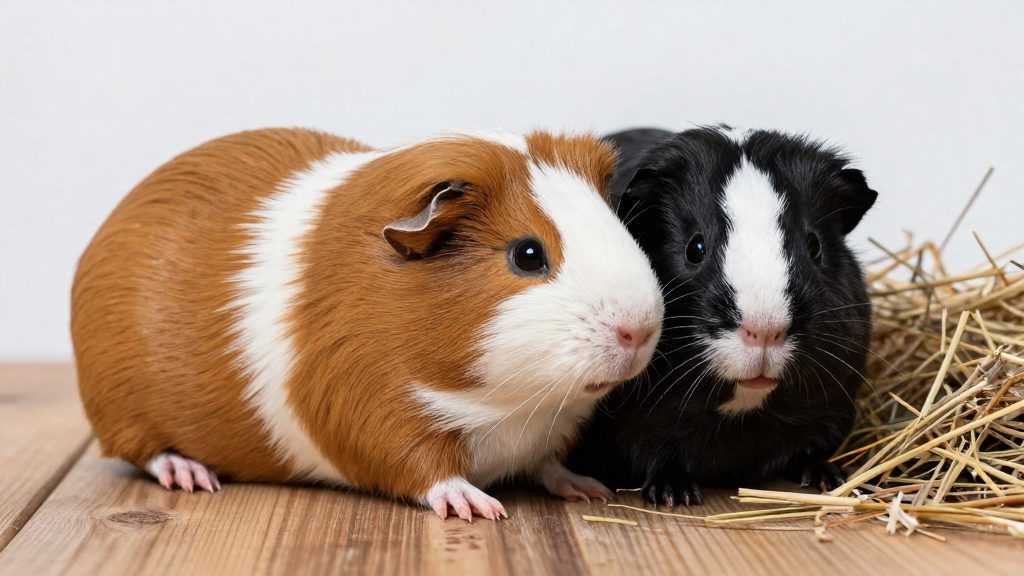
Guinea pigs are highly social animals, so adopting two is the standard recommendation over keeping one alone. According to the Ontario SPCA (2025-11-24), guinea pigs are very sociable, and the organisation strongly encourages a companion of the same sex, noting that females generally get along well together. Choosing a pair from the start means the animals have a conspecific from day one, and the decisions about housing, veterinary care and daily routine are made with two animals in mind.
Why adopt two guinea pigs?
Choosing a same-sex pair
The Ontario SPCA (2025-11-24) recommends a same-sex companion. The official sources consulted for this section do not give further detail on pairing combinations, so the recommendation is limited to same-sex pairs, with females noted as generally compatible.
What a pair changes in practice
- Enclosure size: The Ontario SPCA (2025-11-24) states that bigger is always better. Two animals need enough floor space to move, and the enclosure should be raised above the ground with a solid base.
- Hiding places: - Hiding places: The Ontario SPCA (2025-11-24) says a hiding place must always be provided. Having more than one hide in a shared enclosure is a practical suggestion, not a requirement stated by the source. The same guidance says to keep food, water and toys out of the single toilet corner.
- Chewing items: Incisors grow continuously, so each guinea pig needs access to items to gnaw, such as cardboard or untreated wooden toys.
Choosing a compatible pair
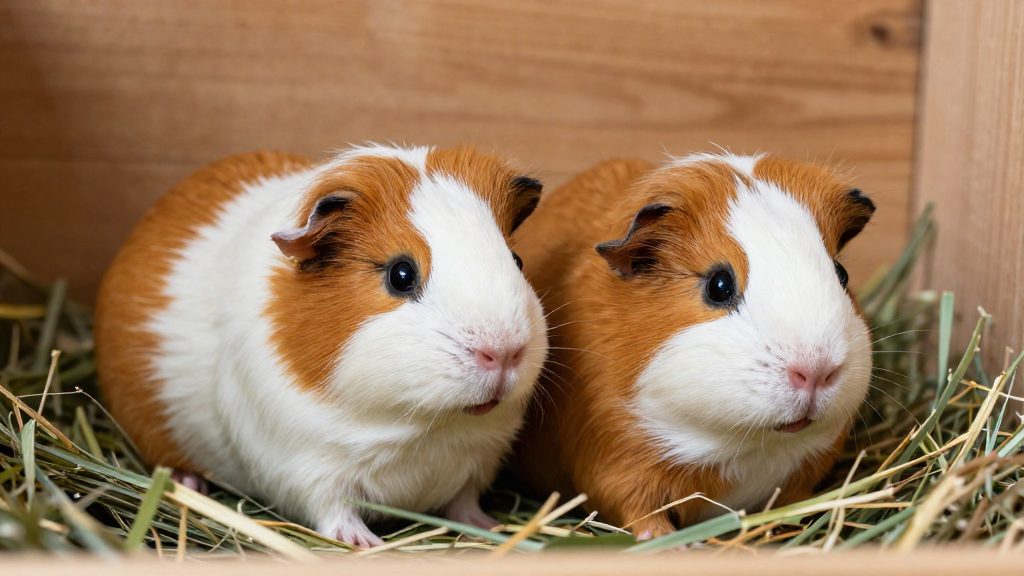
Guinea pigs are highly social. According to the Ontario SPCA (2025), the strongest recommendation is a same-sex companion, and females generally get along well with each other. Compatibility therefore starts with the sex of the animals you adopt, not with coat colour or appearance. The official sources consulted do not specify how male-male or mixed-sex pairs behave, so do not assume those combinations are compatible without advice from an experienced breeder, rescue, or vet.
Before you adopt, check the following points against the same guidance:
| Check before adoption | Why it matters |
|---|---|
| Companion’s sex | Same-sex pairing is strongly encouraged; females generally get along (Ontario SPCA, 2025) |
| Space for two animals | Larger is always better, and the enclosure must be raised with a solid floor (Ontario SPCA, 2025) |
| Vet who treats guinea pigs | Many vets do not treat them, so a vet should be found in advance (Ontario SPCA, 2025) |
| Diet for two | Timothy hay must be available at all times, and vitamin C must come from food because guinea pigs cannot make their own (Ontario SPCA, 2025) |
Planning the space for two
A pair shares one enclosure, so the housing decision is about the combined footprint rather than the needs of a single animal. The Ontario SPCA’s rule that bigger is always better applies with extra weight here. Choose a setup that allows both animals to move freely and to get away from each other, and include a hiding place for each one. The guidance does not give a minimum size, so use the enclosure’s floor area as the measure and avoid buying a setup sized for one animal.
Timing the first vet visit
The Ontario SPCA (2025-11-24) recommends a visit to the family vet within the first week after adoption. Because many vets do not treat guinea pigs, find a vet who does before the animals arrive. Any surgery should be carried out by a vet experienced with the species.
Where to adopt in Canada?
The sources consulted do not describe where guinea pigs can be adopted in Canada. The official sources consulted do not list specific Canadian adoption organisations or their current availability, so the practical approach is to check local listings and assess every source against the same criteria. Whichever source you choose, the goal is to bring home a healthy, social pair whose housing and diet match the basic care described by the Ontario SPCA (2025).
What to check at the source
Ask these questions before committing to a particular animal or pair:
| Question | Why it matters |
|---|---|
| Are the animals housed with a same-sex companion, or are they already a bonded pair? | The Ontario SPCA (2025) strongly encourages a same-sex companion, and females generally get along well together. |
| Is timothy hay available at all times in the current setup? | Timothy hay forms the bulk of the diet, with guinea pig pellets, vegetables and a little fruit added (Ontario SPCA, 2025). |
| Does the diet include a source of vitamin C? | Guinea pigs cannot produce their own vitamin C and need it from food to avoid scurvy (Ontario SPCA, 2025). |
| Does the source work with a vet who treats guinea pigs? | Many veterinarians do not treat guinea pigs, so a practice that does should be identified in advance (Ontario SPCA, 2025). |
Before pickup
-
- Ask the rescue or an experienced vet whether the animals already live together, because the sources consulted do not cover introducing unfamiliar guinea pigs.
- Ask for written details of the current diet, including the type of hay and pellets used, so the change of home is gradual.
- Prepare an elevated enclosure with a solid base and a hiding place. The Ontario SPCA (2025) states that larger is always better, and recommends a single toilet corner with no food, water or toys in it.
- Book a first vet visit within the first week after adoption.
What Enclosure to Provide?
According to the Ontario SPCA (2025), a guinea pig enclosure should be as large as possible, because bigger is always better. It must be raised above the ground and have a solid bottom. The same guidance sets out the interior layout: bedding, a hide, and one designated toilet corner. The official sources consulted do not specify minimum dimensions, so the space you can provide should be the starting point.
| Element | Requirement (Ontario SPCA, 2025) |
|---|---|
| Size | As large as possible |
| Base | Raised above the floor |
| Floor | Solid bottom |
| Hide | Always provided |
| Toilet area | One corner only |
| Chewing items | Provided for continuously growing incisors |
Bedding Options
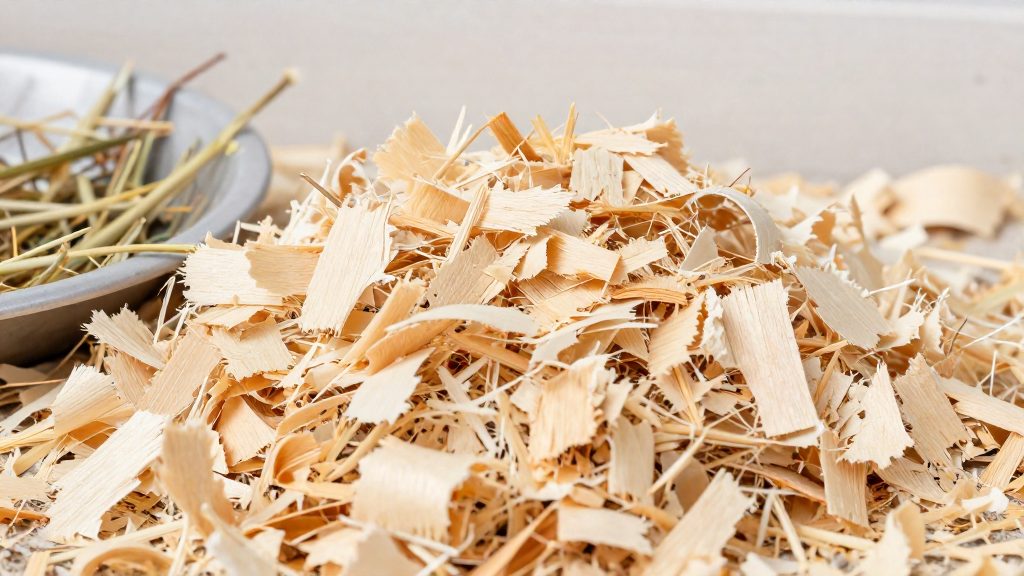
Three bedding types are listed: shredded newspaper, grass hay, and aspen or hardwood shavings. The guidance does not rank them, so choose one based on what you can keep clean and dry.
Hides and the Toilet Corner
A hide is required in every setup. Choose a single corner as the toilet area.
Chewing Items
Guinea pig incisors grow continuously, so the enclosure needs objects to gnaw. The Ontario SPCA lists cardboard and wooden toys as suitable options. Place them outside the toilet corner.
Housing a Pair
The Ontario SPCA strongly encourages a same-sex companion for guinea pigs, and females generally get along well with each other. Plan one enclosure large enough for both animals from the start, with a hide and a single shared toilet corner.
What Does a Guinea Pig Eat?
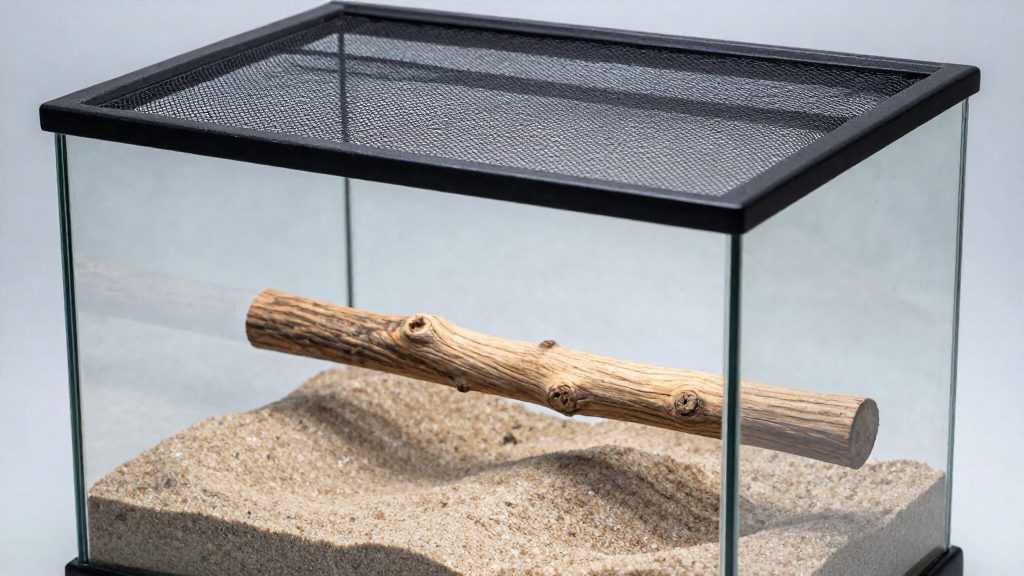
According to the Ontario SPCA (November 2025), timothy hay forms the bulk of a guinea pig’s diet and should be available at all times. Guinea pig pellets, vegetables and a small amount of fruit are added on top of the hay. The diet must also supply vitamin C, because guinea pigs cannot make their own. Without it, the animal is at risk of scurvy.
Components of the Daily Diet
| Component | Role in the diet (Ontario SPCA, November 2025) |
|---|---|
| Timothy hay | Forms most of the diet; available at all times |
| Guinea pig pellets | Added to the hay |
| Vegetables | Added to the diet; the consulted source does not name specific vegetables |
| Fruit | Given in small amounts |
Vitamin C Requirements
A guinea pig’s body does not produce vitamin C, so the animal depends entirely on what it eats. The Ontario SPCA identifies this dependence as the reason food must supply the vitamin to prevent scurvy. The official sources consulted do not specify daily quantities for vitamin C, pellets, vegetables or fruit. For portion sizes suited to an individual animal, ask a veterinarian who treats guinea pigs.
Feeding Routine and Chewing
Hay should stay in the enclosure at all times, rather than being offered in a single session. Pellets, vegetables and fruit are given alongside it, not in place of it.
Guinea pig incisors grow continuously, so the enclosure should also include items to gnaw, such as cardboard or wooden toys, as the Ontario SPCA advises. The Ontario SPCA advises providing items to gnaw because the incisors grow continuously.
Finding a vet and the first visit
A guinea pig needs a veterinarian who treats its species, and the Ontario SPCA (November 2025) recommends a first visit to your family vet within the first week after adoption. Many vets do not treat guinea pigs, so the practical step is to identify a suitable clinic before the animals come home, not once a problem has appeared. The official source consulted covers timing and vet selection but does not list specific warning signs, so the points below focus on those two areas.
Booking the first visit
- Schedule the first check-up within the first week after adoption.
- Confirm by phone that the clinic treats guinea pigs before booking.
- If the family vet does not treat guinea pigs, look for another clinic nearby that does, and arrange it in advance.
Choosing a vet for surgery
Ontario SPCA (November 2025) states that any surgery must be entrusted to a vet experienced with guinea pigs. Ask the clinic directly how often it performs procedures on this species before you need one.
Points to raise at the visit
Two routine elements are worth discussing with the vet during the first check-up, because the Ontario SPCA (November 2025) identifies them as core to the species’ care:
- Teeth: incisors grow continuously, so the animals need items to gnaw on, such as cardboard or wooden toys. Ask the vet to check tooth growth and wear.
- Diet: hay (timothy hay is the base of the diet and should be available at all times), guinea pig pellets, vegetables, and a small amount of fruit. Guinea pigs cannot produce their own vitamin C, so it must come from food to prevent scurvy. Ask the vet to review the diet you have chosen.
First Days at Home
The first days with a guinea pig pair depend on three things: a safe enclosure, a diet that supplies vitamin C, and a veterinarian who treats the species. According to the Ontario SPCA (2025), guinea pigs need an enclosure that is raised above the ground with a solid floor, and bigger is always better. Set it up before the animals arrive so they have room to move from the first day.
Bedding options listed by the Ontario SPCA are shredded newspaper, grass hay, and aspen or hardwood shavings. Every enclosure needs a hiding place, which the Ontario SPCA says must always be provided. Choose one corner as the toilet area and keep food, water and toys out of it, which keeps waste in one spot and makes cleaning easier.
Diet also starts on day one. Timothy hay should be available at all times and makes up most of the diet, with guinea pig pellets, vegetables and a small amount of fruit added. Guinea pigs cannot make their own vitamin C, so they must get it from food to prevent scurvy. The Ontario SPCA guidance does not specify daily amounts of hay, pellets or vegetables, so confirm portions with your veterinarian.
Guinea pig teeth grow continuously. Provide items to chew, such as cardboard or wooden toys, from the first day so the animals can wear their incisors down.
Book a veterinary visit within the first week. Many veterinarians do not treat guinea pigs, so find one who does before bringing the animals home. Any surgery should be carried out by a veterinarian experienced with this species.
Finally, the Ontario SPCA strongly encourages keeping guinea pigs with a companion, and females generally get along well together. Plan the pair before adoption so you do not have to rehome an animal after it arrives.