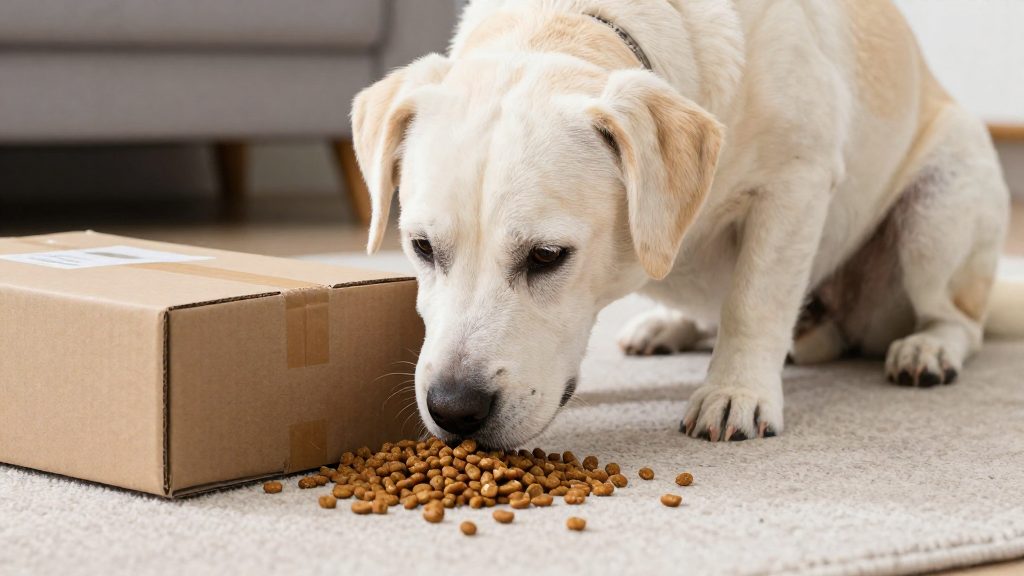
Scent games work indoors because they give a dog a problem to solve with its nose. Instead of running or fetching, the dog has to work out where a hidden treat is, and that effort holds its attention for the length of the search. Because the activity needs no equipment beyond a few containers and treats, it can be run in a single room whenever the dog needs something to do.
Why scent games work indoors
Nose-led search as mental enrichment
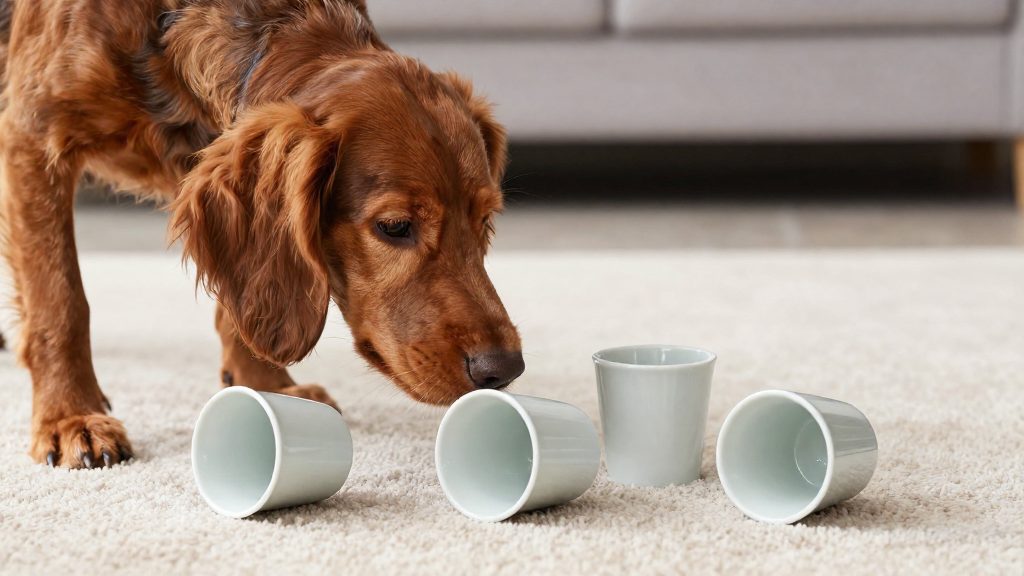
In a nose-led search, the dog must locate a reward by smell. It has to interpret a signal it cannot see, decide which container to check, and commit to that choice. A dog that watches a treat disappear under an object is following a visible cue. A dog that searches is doing the mental work itself. The American Kennel Club (2026) stresses this distinction in its cup game, where containers are shuffled so the dog cannot simply recall the last position and must check again with its nose each round.
This is the core of mental enrichment: the dog is kept busy by a task with a clear goal and a changing outcome, not by repetition of a single movement.
Problem-solving instead of physical exertion
Indoor space limits fetch, chase and running games. Scent games move the effort from the body to decision-making. The dog works at a slower pace, within a small area, and the handler sets the session length. The table below shows where the effort falls in each type of play.
| Activity type | Where the effort falls | Typical indoor fit |
|---|---|---|
| Fetch or chase | Physical movement, speed | Limited by room size |
| Hidden-treat search | Scent tracking and choice | Fits a single room |
Problem-solving is the mechanism here. Each container is a small decision, and a wrong choice costs nothing more than another check. That structure lets the dog succeed repeatedly while still having to think.
Why dogs stay engaged with hidden-treat searches
Engagement comes from uncertainty combined with a reliable reward. The outcome of each container is unknown until the dog investigates, and each correct find confirms that its nose-based approach works. The AKC (2026) also notes that a search can lose its value if it has no clear end. For box search, it advises luring the dog away with a treat once the hidden items are found, so the dog does not keep searching and become frustrated.
What you need before you start
Indoor scent games need only ordinary household items, and the main equipment choice is the container, which should match your dog’s size. The American Kennel Club (2026) states that small dogs can use paper cups, while larger dogs need sturdier plastic cups or flower pots.
| Dog size | Suitable container (per AKC, 2026) |
|---|---|
| Small dog | Paper cups |
| Larger dog | Sturdier plastic cups or flower pots |
Showing treats before tennis balls
Some games use tennis balls as covers. The muffin tin puzzle, for example, hides treats under tennis balls (AKC, 2026). For dogs that are highly motivated by balls, Whole Dog Journal (2023) notes that the dog may grab the ball and run off. Showing the dog the treats before the ball appears in the setup helps keep the focus on the smell rather than the toy. Use this step only if your dog is ball-obsessed. Dogs with a calmer interest in balls may not need it.
Choosing a quiet, low-distraction room
Pick a room with little foot traffic, where other pets, children or household noise are unlikely to interrupt. A quieter room lets the dog concentrate on searching by scent. The sources consulted do not specify a minimum room size or floor layout. Choose a space large enough to set out several containers without them being crowded together or placed where the dog could knock them over.
Easy scent games to try at home
Three starter games work well indoors: the muffin tin puzzle, the cup game and box search. Each game asks the dog to find a treat by smell and rewards it when it finds the hiding place. The steps below cover the setup and sequence of each one.
Muffin tin puzzle
The muffin tin puzzle hides treats under tennis balls, one per cup. It works as a single round:
- Place a treat in some of the cups of a muffin tin, and leave others empty.
- Cover each cup with a tennis ball so that no treat is visible.
- Release the dog and let it search by smell.
- Reward the dog each time it uncovers a treat, then reset the tin for another round.
Cup game
The cup game starts simply and adds difficulty through the number of cups:
- Hide one treat under one cup while the dog watches.
- Let the dog find it and reward it.
- Add more cups and shuffle them.
- Repeat the round, keeping the treat under one cup at a time.
Box search
Box search uses empty boxes as hiding places:
- Place treats in some of the boxes and leave the others empty.
- Let the dog move from box to box and search.
- When the treats are gone, end the game with a lure: hold a treat and move it away from the boxes so the dog follows you.
The lure ending matters because it stops the dog from searching a finished area. The American Kennel Club (2026) advises this step specifically so the dog does not keep searching and become frustrated.
How do you make scent games harder?
Once a dog finds hidden treats reliably, you can raise the difficulty in three ways: add more hiding spots, vary where and how high the spots are, and move the search into unfamiliar rooms. Change one lever at a time so the dog keeps succeeding and does not become frustrated.
Add more hiding spots and empty containers
Increase the number of containers and include empty ones. The dog then has to check each option rather than assume the treat is under the first container it finds. Match the container to the dog’s size. The American Kennel Club (2026) recommends:
| Dog size | Suitable container |
|---|---|
| Small dogs | Paper cups |
| Larger dogs | Sturdier plastic cups or flower pots |
Vary heights and spacing across the room
Place containers at different heights, mixing floor-level spots with raised surfaces such as a sturdy chair seat. Spread them across the room instead of grouping them together. A cluster lets the dog search one small area, while separated spots require it to travel and sniff the whole space. Keep the spacing wide enough that the dog can move between spots without knocking containers over.
Move searches into unfamiliar indoor rooms
Start in a room the dog already knows, then move the game to a room it has not searched before. A new room means a new layout and new air patterns. Introduce one new room at a time, and return to a familiar room if the dog stops searching.
How long should a scent session last?
The official sources consulted do not specify a recommended session length for indoor scent games, so the most reliable measure is the dog’s engagement, not the clock. End each session while the dog is still working with interest. A session that stops on a successful find leaves the dog keen to return, while one that continues until the dog gives up often makes the next session harder to start.
Signs the dog is still engaged or done
| Signal | Still engaged | Disengaging or tired |
|---|---|---|
| Nose work | Sniffs low and methodically, returns to the hiding area | Sniffs at the surface, skips cups or boxes |
| Body language | Moves with purpose, tail relaxed or up | Slows down, lies down, looks away |
| Response to a find | Eats the treat and starts the next search | Ignores the treat or walks off |
| Focus on you | Watches your hands as you shuffle the containers | Wanders toward the door or other objects |
Stopping before frustration sets in
Frustration is usually visible before the dog gives up. Watch for pawing at the containers, barking, or repeatedly throwing its body against them. When you see these signs:
- Make the next hide simpler, so the dog finds it quickly.
- Do not add more containers while the dog is struggling.
Ending on a failed search can make the game feel hard to win, so it is usually better to simplify the hide and end on a success.
Spacing sessions across the day
Indoor dogs generally work better with several brief sessions spread across the day than with one long block. Short sessions are easier to end on a success while the dog is still keen, and they fit around the dog’s rest periods. Keep sessions out of the period just before the dog is expected to settle for sleep, so the search does not leave it overexcited.
Are scent games safe for puppies and seniors?
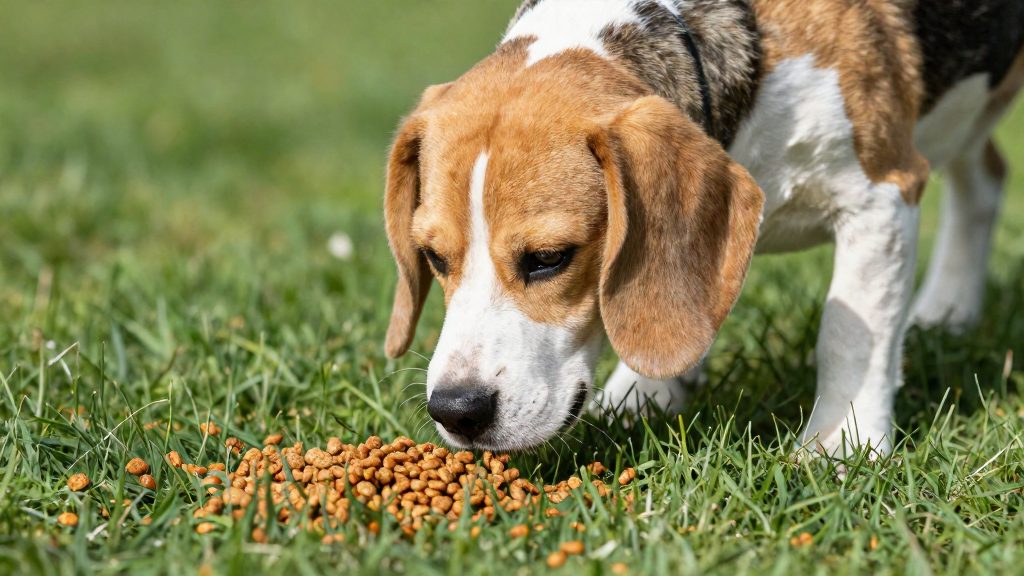
Generally yes. According to the American Kennel Club (2026), indoor scent games suit dogs of any age, including puppies and seniors. Whole Dog Journal (2023) adds that scent games carry a low risk of physical injury. Low risk is not no risk, though. If your dog has a health condition, is recovering, or shows a new change, check with your veterinarian first. The activity consists of searching with the nose, not jumping, climbing or sprinting, so it places little strain on the body. That is why it fits dogs at both ends of the age range.
Suitability across puppies, adults and seniors
Scent games scale with the handler’s choices rather than the dog’s physical ability. The AKC lists three starter formats: the muffin tin puzzle, where treats are hidden under tennis balls; the cup game; and box search, where treats are hidden in some empty boxes. The cup game shows how difficulty can increase gradually. The handler begins with one treat under one cup, then adds more cups and shuffles them. A young puppy can begin with the simplest version, and an older dog can work the same format at its own pace.
Dogs confined by illness or recovery
Whole Dog Journal (2023) also identifies scent games as useful for confined dogs, meaning dogs limited to a small area because of illness or recovery. The search gives mental work without requiring the dog to move around a room or run. The sources consulted do not specify which activity levels suit a particular recovery, or how long a session should last for an ill dog, so the appropriate limits should be set with the veterinarian before starting.
When scent games are not enough: when to see a vet
Low risk is not no risk. A game can reveal a change in a dog, but it cannot diagnose one. The useful distinction is between ordinary tiredness after a session, which is expected because nose work is mentally demanding, and a change in behaviour or body that persists after the dog has had time to settle.
Ordinary fatigue versus a change worth reporting
Before starting a new routine, note your dog’s normal baseline:
- Appetite and water intake on game days and rest days
- How eagerly the dog starts a search, and how quickly it settles afterwards
- Gait, posture, and any stiffness when getting up, climbing, or jumping
A dog that is simply tired should settle and return to its usual behaviour. If it does not, or if any warning sign below appears, contact your veterinarian. Judge by the pattern across several sessions rather than a single one.
Behaviour changes versus possible medical causes
A behaviour change can have a medical origin as well as a training cause. A dog that stops searching may be bored, or it may be in pain. The official sources consulted do not describe how to tell these apart at home, so do not draw conclusions from the game alone. Symptoms that warrant a veterinary assessment include:
- Limping, reluctance to jump or climb, or flinching when touched
- Loss of appetite or a marked change in drinking, especially in a puppy, a senior or a dog with a health condition (contact your veterinarian promptly rather than waiting several days)
- Diarrhea, or a single episode of vomiting that settles (contact your veterinarian; repeated vomiting is urgent, see below)
- Coughing that persists (laboured breathing and blood in stool or urine are urgent: see the emergency line below)
- Eye, ear, or skin changes, or persistent scratching
- New confusion, disorientation, or aggression in a dog that was previously calm
Collapse, laboured breathing, a sudden inability to stand, repeated vomiting, or blood in vomit, stool or urine need immediate contact with a veterinarian or emergency animal clinic, not a wait-and-see approach.
When to ask a veterinarian first
Stop the game and ask your vet before continuing if any sign above appears, if your dog has a known health condition, or if a puppy or senior shows a new change. Bring a short written log with the date, the game type, what changed, and how long it lasted. This gives the vet concrete information to work with.
Next step: moving from home games to scent work
Home scent games can lead into scent work, a structured dog sport built on the same principle. In the US AKC programme, competition scent work uses essential oils as target odours. The first is birch, the AKC Novice-level scent, and anise and clove are added at later levels (Whole Dog Journal, 2023-04-12). The official sources consulted do not specify which Canadian organisations run scent work classes or how their levels are arranged, so the points below describe the general progression rather than a Canadian rulebook.
What changes when moving from home games to classes
Home games use food-scented hides, often in cups or boxes that the owner can see and control. A class setting adds structure:
- Target odour replaces treats. The dog learns to search for one specific essential oil rather than any food smell.
- The search area becomes defined. Instead of a room you set up, the dog works within boundaries that an instructor or organiser marks out.
- Finding the odour is the reward. Home games often end with a treat handed over right away, which is the habit that structured classes gradually change.
Because a dog that already enjoys box search or the cup game is familiar with using its nose, the transition is usually about adding these constraints in small steps, not learning a new skill from scratch.
Scent levels in competition
| Scent | Level or stage | Source |
|---|---|---|
| Birch | AKC Novice-level scent | Whole Dog Journal (2023-04-12) |
| Anise | Added at later levels | Whole Dog Journal (2023-04-12) |
| Clove | Added at later levels | Whole Dog Journal (2023-04-12) |
The sources consulted name only these three oils and do not give the number of levels or the requirements for advancing between them.
Frequently asked questions
Are indoor scent games safe for puppies and senior dogs?
Yes, in general. The American Kennel Club (2026) states that indoor scent games suit dogs of any age, including puppies and seniors, and Whole Dog Journal (2023) reports a low physical injury risk for the activity. A dog with a health condition, a recovering dog, or a puppy or senior showing a new change should be checked by a veterinarian before you start.
Which containers should I use for a beginner game?
Match the container to your dog’s size. The American Kennel Club (2026) suggests paper cups for small dogs and sturdier plastic cups or flower pots for larger dogs, so that the dog can’t easily tip or knock them over. Start with a few containers and add more only once your dog finds the treat reliably.
How should I end a session so my dog stays motivated?
Finish with a lure treat so the dog stops searching instead of continuing to hunt and becoming frustrated, as the American Kennel Club (2026) advises for box search. Training practice also favours ending on a successful find rather than a failed one, so simplify the hide when your dog struggles.