Pet fish become stressed when conditions in their housing, social setting, diet or handling fall outside what they can tolerate. In veterinary terms, stress is the sum of the biological reactions to any adverse stimulus. According to dvm360 (Joerg Mayer, DVM, DABVP, 2010), the common stressors include poor housing, improper social groupings, unsuitable food and inadequate cleaning. The typical responses are reduced feeding and reproduction, and decreased immune function that can lead to disease and death.
Why do pet fish get stressed?
Stress as a sum of reactions
A stressor is any stimulus that triggers a biological reaction. Fish do not show stress through one fixed signal. Each stimulus adds to the total load, and the fish’s response is the combined result. This is why a fish can appear healthy after a single change and decline after several. The sources consulted do not describe how many stimuli are needed to cause harm, so no threshold is given here.
Poor housing
The sources consulted do not give minimum tank volumes or setup standards for specific species, so a keeper should confirm the requirements of each species with a veterinarian or a reputable aquarium society before buying.
Incompatible social groupings
Mixing species or individuals that do not tolerate each other is a documented trigger. dvm360 (2010) reports that territorial aggression between tank mates can chronically stress subordinate fish until they die.
Unsuitable food
The sources consulted do not specify which diets suit which species, so the food should be checked against the species’ requirements from a veterinary or specialist source.
Inadequate cleaning
Routine cleaning of the tank and its furnishings, and removal of waste, keep the environment consistent for the fish.
Handling
The sources consulted do not give specific handling guidance. Under the definition above, each netting or transfer is an adverse stimulus, so limiting how often fish are caught and moved reduces the total stress load.
From stress to disease
Stress is significant because of its effect on immunity. The sources consulted do not specify the timeframe over which this progression occurs, so no duration is given. For sick fish, the NSW Department of Education (2026) advises monitoring them closely and testing water quality, temperature and pH. The sources do not set a veterinary referral threshold.
Behaviour changes that signal stress
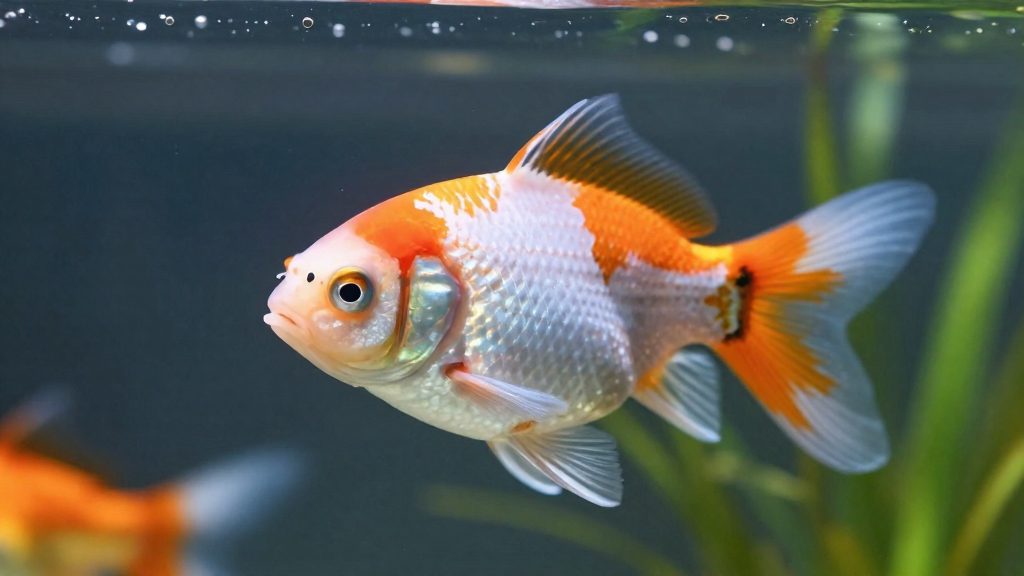
Stress in fish often appears first as a change in behaviour. The most useful reference point is the fish’s own normal baseline: its usual activity level, its willingness to approach food at feeding time, and the parts of the tank where it normally spends time. A departure from that baseline is a prompt to check the tank, not a diagnosis.
Reduced appetite and altered feeding routines
NSW Department of Education (Australia, 2026) states that a fish refusing food for 2 or more days may be stressed by changes in water quality, new tank mates, or incompatible fish. This is Australian school guidance, and no Canadian source was consulted. Refusing food is one warning sign among several. The two-day figure applies to a fish that was previously eating normally. A fish that still eats but stops coming to the surface at feeding time, or only feeds after its tankmates have finished, shows an altered routine that the sources consulted do not address directly.
Hiding, lethargy and abnormal swimming positions
The official sources consulted do not specify a time threshold or a set pattern for hiding, lethargy or abnormal posture. What can be recommended is a consistent observation method: note where the fish normally sits and swims, then record when it stays hidden longer than usual or stops moving between feeds. For a fish that appears unwell, NSW Department of Education (Australia, 2026) advises monitoring it closely and testing water quality, temperature and pH.
Rubbing, chasing, nipping and aggression
Rubbing against objects is a behaviour the NSW guidance links to parasites (2026). Aggression between tankmates is a separate problem. A single chase is less significant than a pattern in which one fish is repeatedly pursued, nipped or kept away from food and shelter. The official sources consulted do not specify how to separate tankmates or how long a separation should last.
| Behaviour change | Factors named in the official sources |
|---|---|
| Refusing food for 2 or more days | Changes in water quality, new tank mates, incompatible fish (NSW Department of Education, 2026) |
| Rubbing against objects | Parasites (NSW Department of Education, 2026) |
Physical signs on fins, gills and skin
Changes to the fins, gills and skin are among the most visible signs that a fish is stressed, irritated or injured. Because body changes are often the first thing a keeper can see, a regular close inspection of each fish is the practical starting point for spotting a problem.
Fin erosion as a general stress marker
Fin erosion, where fins look frayed, ragged or shortened, is described by dvm360 (2010) as a sign of stress. The source states that its presence “is often a sign that all is not well”, so it should prompt a review of the whole tank rather than a diagnosis of one cause. If erosion appears on one fish, check whether another fish is consistently harassing it.
Flashing, scraping and rubbing
Flashing, meaning a fish rubbing or scraping its body against objects, can indicate ectoparasite irritation according to dvm360 (2010). The NSW Department of Education (2026) similarly states that rubbing against objects suggests parasites. Record how often the behaviour occurs and which fish shows it, then seek advice from a veterinarian or qualified aquatic specialist. The official sources consulted do not specify any treatment for this sign, so no treatment should be started on the basis of these sources alone.
Skin lesions, ulcers and quarantine
For fish with skin lesions, the NSW Department of Education (2026) advises moving the affected fish to a quarantine tank and monitoring it closely. The official sources consulted do not specify a veterinary referral threshold for lesions, so contacting a veterinarian promptly about any skin lesion is a sensible precaution, although it is not a sourced rule.
Summary of visible signs
| Visible sign | Cause named in the sources | Recommended step |
|---|---|---|
| Frayed or shortened fins | Stress, often linked to a wider tank problem (dvm360, 2010) | Review tank conditions and tank mate behaviour |
| Red streaks and torn fins | Ammonia poisoning (NSW Department of Education, 2026) | Test water quality |
| Puffy or swollen gills | Insufficient water quality (NSW Department of Education, 2026) | Test water quality |
| Flashing or scraping | Ectoparasite irritation (dvm360, 2010) | Record frequency and seek veterinary advice |
Is my fish gasping at the surface?
Gasping at the surface is a warning sign that the water may not be supplying enough oxygen or that water quality has declined. Other causes, including disease, cannot be ruled out without a veterinary assessment. According to the NSW Department of Education (Australia, 2026-08-28), gasping at the surface points to low oxygen or poor water quality, often caused by inadequate aeration. Treat the behaviour as a symptom to investigate, not as a diagnosis in itself.
What gasping indicates
A fish that is gasping repeatedly rises to the top of the tank to take in air or oxygen-rich surface water. The usual cause is low dissolved oxygen. The first step is therefore to check the water and confirm that aeration is running. Do not rule out disease. Check the water and aeration, and contact a veterinarian promptly about the gasping.
Gill changes during an episode
The NSW Department of Education (2026-08-28) states that puffy or swollen gills point to insufficient water quality. During an episode, observe the gill covers while the fish is at the surface and note whether they look swollen compared with the fish’s normal appearance. The official sources consulted do not describe gill colour changes or flaring patterns, so these features should not be used to diagnose a cause without a veterinary assessment.
Gasping or normal surface feeding?
Some species feed at the surface, so surface activity alone does not show a problem. To tell the two apart, compare the behaviour across the day:
- Feeding: the fish rises briefly at feeding time, takes food and returns to its usual swimming position.
- Gasping: the fish stays near the surface between feedings, or keeps rising to the top without a food source.
A gasping fish that also refuses food is more concerning.
What to check first
- Confirm that the aeration equipment is switched on and working.
- Test temperature, dissolved oxygen, pH, ammonia and nitrite, and compare the results with the ranges for your species from a veterinarian or aquatic specialist.
- Watch the fish closely for the next day and record whether the gasping continues.

Water quality problems that can cause stress
Poor water quality is one of several possible sources of stress in pet fish.
Parameters to monitor
The dvm360 article (2010) names the water parameters a keeper should monitor:
- Temperature
- Dissolved oxygen
- Ammonia
- Nitrite
- Nitrate
- pH
- Water hardness
The official sources consulted do not give numeric target ranges for these values. Any change in a reading is worth recording over time.
New tank syndrome
Stocking a tank before it has matured, meaning before the ammonia cycle is established, causes what dvm360 (2010) calls new tank syndrome, with heavy losses. As a general precaution, test ammonia and nitrite before adding fish and ask a veterinarian or aquatic specialist when the tank is ready. The sources consulted do not give a duration for the cycle, so no timeframe should be assumed. The practical step is to test ammonia and nitrite before adding any fish and to wait until those readings show the tank has settled.
Temperature fluctuations
Temperature is on the monitoring list above, but the sources consulted do not specify safe temperature ranges or acceptable daily swings for any species. The general principle is to keep temperature stable and check it with a thermometer alongside the other tests.
Water quality and feeding
Water quality is one of several possible causes of refused food, so test the water before assuming another cause.
When is it time to see a vet?
Contact a veterinarian promptly if a fish is gasping at the surface, has any skin lesion, or shows a marked decline, or if several fish decline at the same time. Test the water at the same time. Do not wait for signs to persist. The official sources consulted do not set a veterinary referral threshold for fish, so the points below are general guidance rather than a fixed cut-off. Neither source sets a veterinary referral threshold. Prompt veterinary advice for gasping, skin lesions or decline is general guidance and is not a sourced rule.
Sudden decline and multiple affected fish
A sudden decline across several fish may point to a shared cause such as water quality, although the sources consulted do not confirm this. When more than one fish is affected, test the water immediately and arrange a veterinary assessment promptly.
- One fish affected: monitor closely and consider whether the fish needs isolating.
- Several fish affected: treat the tank as the primary suspect and record what has changed.
Finding a qualified aquatic or exotic veterinarian
Not every veterinary clinic treats fish. Use the following steps to narrow the search:
- Ask clinics directly whether a veterinarian treats fish, reptiles and small pets, not only dogs and cats.
- Look for stated training in exotic or aquatic animal medicine. Ask the clinic to explain any board certification it lists.
- Ask how they want the fish transported and whether they need water samples.
- Confirm whether they handle urgent cases and how to reach them outside opening hours.
Information to bring
Prepare the following before the visit so the veterinarian can assess the tank as well as the fish.
| Item | What to record |
|---|---|
| Water test results | Temperature, dissolved oxygen, ammonia, nitrite, nitrate, pH and water hardness, with the date and time of each reading |
| Tank setup date | Whether the tank had matured before stocking |
| Stocking history | Species, number of fish and the date each was added |
| Recent changes | Water changes, food changes, new tank mates and any aggression between fish |
| Affected fish | Number of fish affected, species and when signs began |
| Treatments already used | Product names and dates. Do not add dosing details unless a veterinarian has advised them |
The official sources consulted do not specify which water test methods a veterinarian will request, so ask the clinic before the visit.
How to reduce stress in your aquarium
Many of the adverse stimuli a fish experiences come from the tank itself. Routine maintenance addresses cleaning directly. The official sources consulted do not specify a water change volume, a photoperiod or a stocking density, so the steps below are general principles to adapt to your species and tank size.
Routine maintenance
Maintenance is the main way to keep conditions stable, because it lets you prevent problems on a schedule instead of reacting to them.
- Replace water in partial changes on a regular cycle rather than all at once. Match the new water’s temperature to the tank before adding it.
- Rinse filter media in water removed from the aquarium, not in tap water, so the beneficial bacteria living in the media are not killed.
- Replace only part of the filter media at a time, so the biological filter keeps working during servicing.
- Remove uneaten food and waste during each session.
Aeration and surface movement
Oxygen enters the water mainly at the surface. An air pump with an air stone, or a filter outlet that breaks the surface, improves gas exchange. Position outlets to produce gentle surface movement without blasting the fish. Check the pump regularly, since a stopped pump removes aeration without any visible warning.
Lighting, shelter and stocking
| Element | Practical action | Stress link |
|---|---|---|
| Lighting | Run the light on a consistent daily schedule and avoid sudden changes | Abrupt changes add to the adverse stimuli a fish experiences |
| Hiding spots | Provide plants, caves or decor so fish can move out of view | Shelter is part of suitable housing |
| Stocking density | Choose species that suit each other’s temperament and do not overcrowd the tank | Limits competition for space and food |
Frequently asked questions
Which visible signs suggest my fish is under stress?
The NSW Department of Education (Australia, 2026) links gasping at the surface to low dissolved oxygen or declining water quality, often caused by inadequate aeration, and links puffy or swollen gills to insufficient water quality. Other causes, including disease, cannot be excluded without a veterinary assessment.
Does a fish that refuses food always mean stress?
Not necessarily. The NSW Department of Education (Australia, 2026-08-28) links a fish that refuses food for two or more days to possible stress from changes in water quality, new tank mates or incompatible fish, but this is Australian school guidance and no Canadian source was consulted. Refusing food is one sign among several, so read it alongside water test results and the fish’s other behaviour.
What should I do first when a fish shows these signs?
Test temperature, dissolved oxygen, pH, ammonia and nitrite, and compare the results with the ranges for your species from a veterinarian or aquatic specialist, since the official sources consulted do not give numeric thresholds. Fish with skin lesions should go into a quarantine tank, according to the NSW Department of Education (Australia, 2026). As a general precaution, contact a veterinarian promptly for gasping, skin lesions or a marked decline rather than waiting, because the sources consulted set no referral threshold.