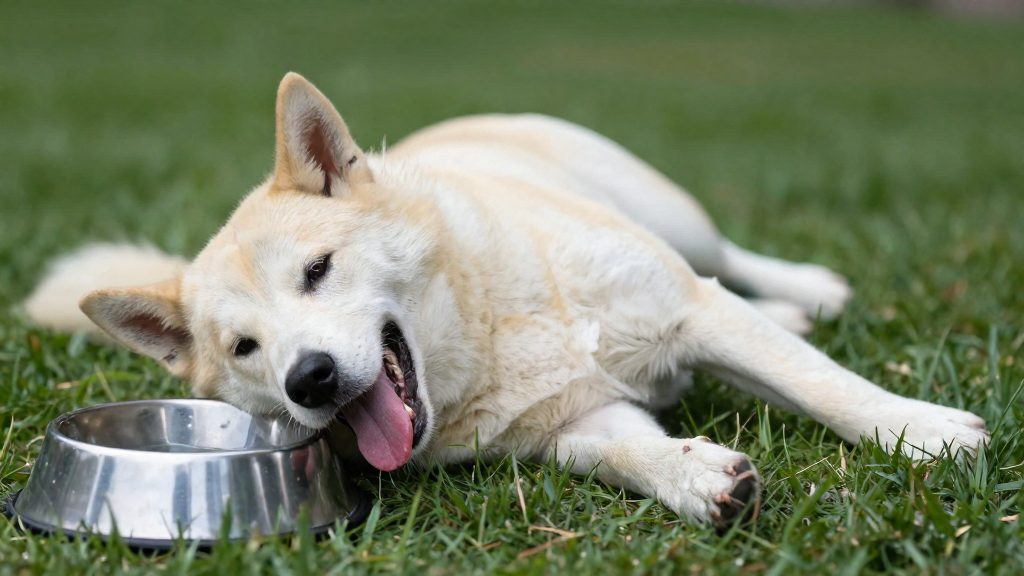
Heatstroke in dogs is a rise in core body temperature that causes direct thermal injury to organs. The Ontario SPCA and Humane Society (2022) defines it with a threshold of a core body temperature above 40°C. Dr. Marie Holowaychuk, a Calgary board-certified emergency and critical care veterinarian, describes it as organ injury caused by heat itself, not simply an overheated dog. Because the body cannot shed heat indefinitely, temperature can pass the safe limit quickly once heat gain exceeds heat loss.
What is heatstroke in dogs?
How dogs regulate body heat
Dogs cool themselves mainly through panting. The official sources consulted do not quantify how much heat dogs lose through other routes, so this article does not assign a ratio. Panting only works when the air is cooler than the dog and the airway is open. Any condition that narrows the airway weakens this main cooling route, which is why breathing problems raise the risk of heatstroke.
Why 40°C marks the threshold
The temperature figures in the sources consulted are:
| Reference point | Temperature | Source |
|---|---|---|
| Heatstroke threshold (core body temperature) | Above 40°C | Ontario SPCA and Humane Society (2022) |
| Temperature at which active cooling was stopped in a clinical case | 39.7°C (103.5°F), rectal | Holowaychuk, Clinician’s Brief (undated) |
| Temperature of the case dog on arrival at the clinic | 40.8°C | Holowaychuk, Clinician’s Brief (undated) |
The 40°C figure is the defining cut-off. The clinical case shows that a dog already above that threshold can still be treated, and that cooling was stopped at 39.7°C to avoid overshooting.
How heatstroke differs clinically from heat exhaustion
The sources consulted do not give a separate clinical definition or temperature band for heat exhaustion, so this article does not set a numerical boundary between the two conditions. What they do establish is the nature of heatstroke: injury to organs. Pet Friendly Canada (2026) and the Ontario SPCA describe signs that affect several body systems:
- Neurological: confusion or disorientation, staggering, glazed or unfocused eyes, seizures, coma.
- Circulatory: fast or irregular heartbeat, tacky gums, unusual gum colour (bright red, sometimes blue).
- Gastrointestinal: vomiting and diarrhea. The clinical case also showed blood-tinged stool.
- Consciousness: collapse, unresponsiveness or loss of consciousness.
The clinical case combined excessive panting and noisy, laboured breathing with lethargy, collapse, a fast heart rate and bright red gums. Any suspected heatstroke is a medical emergency.
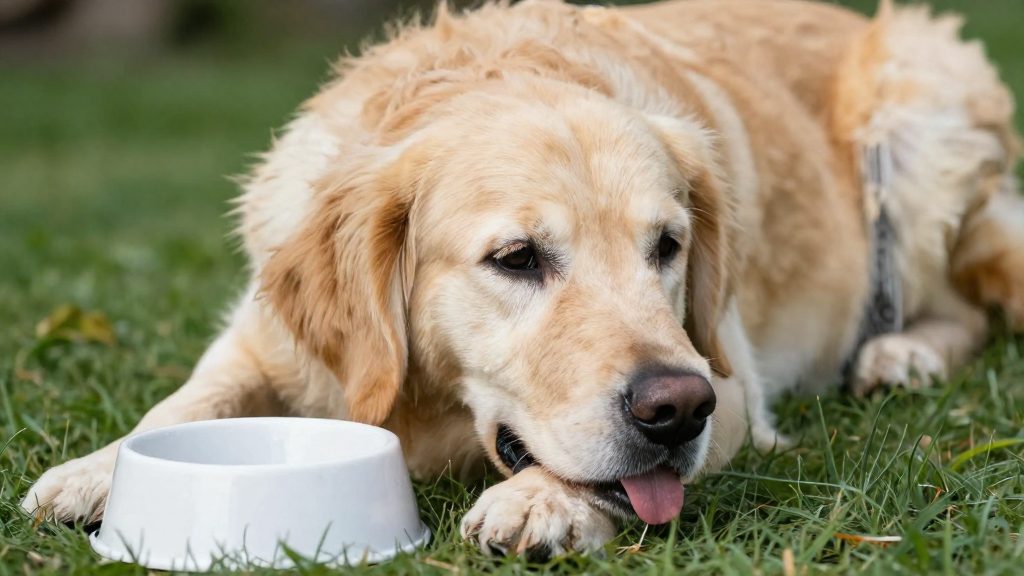
Early signs of heatstroke in dogs
Heatstroke signs can include heavy panting with excessive drooling, a bright red tongue, a fast heartbeat and lethargy. The sources do not set out a fixed order in which they appear. Dogs also shed heat by evaporating moisture from the mouth and tongue. When that cooling begins to fail, the dog keeps working at full effort without shedding enough heat. According to Pet Friendly Canada (2026), the early changes to watch for are heavy panting with excessive drooling and a bright red tongue, sometimes blue. These changes are the window in which an owner can act.
Heavy panting with excessive drooling
Panting is a normal cooling method, so the signal is its intensity and persistence. Pet Friendly Canada (2026) lists heavy panting with excessive drooling as a warning sign, and the Ontario SPCA and Humane Society (2022) lists heavy panting or drooling in the same group. Panting is a normal cooling method, so the signal is its intensity. Heavy panting with excessive drooling is a listed warning sign of heatstroke. Start cooling right away and contact a vet immediately. Do not wait to see whether it eases.
Fast or irregular heartbeat
The Ontario SPCA and Humane Society (2022) lists a fast heartbeat among the signs, and Pet Friendly Canada (2026) adds a rapid or irregular heartbeat. To check, place a hand on the left side of the chest, just behind the elbow, and count beats for 15 seconds, then multiply by four to get beats per minute. The official sources consulted do not give a normal resting rate for dogs here, so compare the result with the rate your own vet has recorded for your dog. A fast or irregular heartbeat in a dog with other signs of heatstroke is an emergency: start cooling and take the dog to a vet immediately.
Bright red tongue and gum changes
A bright red tongue is listed by Pet Friendly Canada (2026). The Ontario SPCA and Humane Society (2022) also lists unusual gum colour and, in some cases, sticky or dry gums. Dr. Marie Holowaychuk, a Calgary board-certified emergency and critical care veterinarian, describes bright red gums in a dog that presented with heatstroke, alongside excessive panting and a fast heart rate. Lift the lip in shade and compare the gums and tongue with the colour the dog normally has.
Advanced and emergency signs
As heatstroke progresses, the signs move beyond overheating to failure of the nervous, digestive and circulatory systems. The advanced signs below reflect that organ damage.
| System affected | Signs listed | Source |
|---|---|---|
| Nervous system | Staggering or uncoordinated movement, glazed or unfocused eyes, confusion or disorientation | Pet Friendly Canada (2026); Ontario SPCA and Humane Society (2022) |
| Digestive system | Vomiting, diarrhea, blood-tinged stool | Ontario SPCA and Humane Society (2022); Holowaychuk case report |
| Gums and circulation | Bright red gums, tacky or sticky gums, unusual gum colour | Pet Friendly Canada (2026); Ontario SPCA and Humane Society (2022) |
Neurological signs
A dog with advanced heatstroke may walk unsteadily, lose its footing or fail to control its legs. Its eyes may look glazed or unfocused, and it may appear confused or disoriented. These changes indicate that the brain is affected, so they should be treated as an emergency.
Gastrointestinal signs
Vomiting and diarrhea can occur during heatstroke. In the Calgary case report, the dog also passed blood-tinged stool, which signals intestinal injury.
Gum colour and circulation
Gum colour is a practical check. Lift the lip and look at the gums: bright red, bluish or unusual gum colour, or tacky or sticky gums, differ from normal moist gums. These are signs of heatstroke, so cool the dog and take it to a vet immediately.
Collapse, seizures and coma
The most severe stage includes collapse, seizures, unresponsiveness or loss of consciousness. The Calgary case dog collapsed and arrived at a body temperature of 40.8°C, which shows that a body temperature above 40°C can coincide with serious neurological and circulatory compromise.
Which dogs are most at risk?
Some dogs lose heat less efficiently than others, so they reach dangerous body temperatures sooner under the same conditions. Dr. Marie Holowaychuk, a Calgary board-certified emergency and critical care veterinarian, lists six risk factors for heatstroke in dogs: laryngeal paralysis, brachycephalic obstructive airway syndrome, obesity, cardiovascular disease, older age, and a dark or dense hair coat. The source does not give a publication date for this Clinician’s Brief. The groups below follow that list and explain how each factor limits cooling.
Brachycephalic breeds
Flat-faced, or brachycephalic, breeds are the clearest example of anatomy that limits heat loss. Bulldogs, pugs and French bulldogs are common examples of this type. Their facial structure is associated with brachycephalic obstructive airway syndrome, a condition that obstructs the upper airway and restricts the panting a dog relies on to cool down. A dog that cannot pant effectively has fewer ways to release heat, so moderate warmth or exercise can become hazardous.
Dogs with airway or heart disease
Two medical conditions reduce cooling in different ways:
- Laryngeal paralysis affects the larynx, which can limit airflow into the lungs and reduce the dog’s ability to pant.
- Cardiovascular disease weakens circulation, which limits how much heat the blood can carry to the skin and body surface for release.
Dogs diagnosed with either condition should be considered higher risk in warm weather, even when they are otherwise healthy in appearance.
Obese, older, and less fit dogs
Excess body weight adds to the body’s heat load and reduces tolerance for exertion. Older age also lowers physiological reserve, so older dogs may struggle to regulate temperature. The official sources consulted do not specify temperature thresholds that differ by age or weight category.
Dogs with dark or dense coats
A dark or dense hair coat holds heat against the body. Dogs with these coat types are listed as a risk factor, though the source does not quantify how much the coat affects body temperature.
| Risk group | Listed risk factor | How it limits cooling |
|---|---|---|
| Brachycephalic breeds (e.g. bulldogs, pugs, French bulldogs) | Brachycephalic obstructive airway syndrome | Restricts airflow needed for panting |
| Dogs with laryngeal paralysis | Laryngeal paralysis | Limits airflow through the larynx |
| Dogs with heart disease | Cardiovascular disease | Reduces blood flow to the skin for heat release |
| Obese dogs | Obesity | Adds heat load and reduces exercise tolerance |
| Older dogs | Older age | Lowers physiological reserve |
| Dogs with dark or dense coats | Dark or dense hair coat | Holds heat against the body |
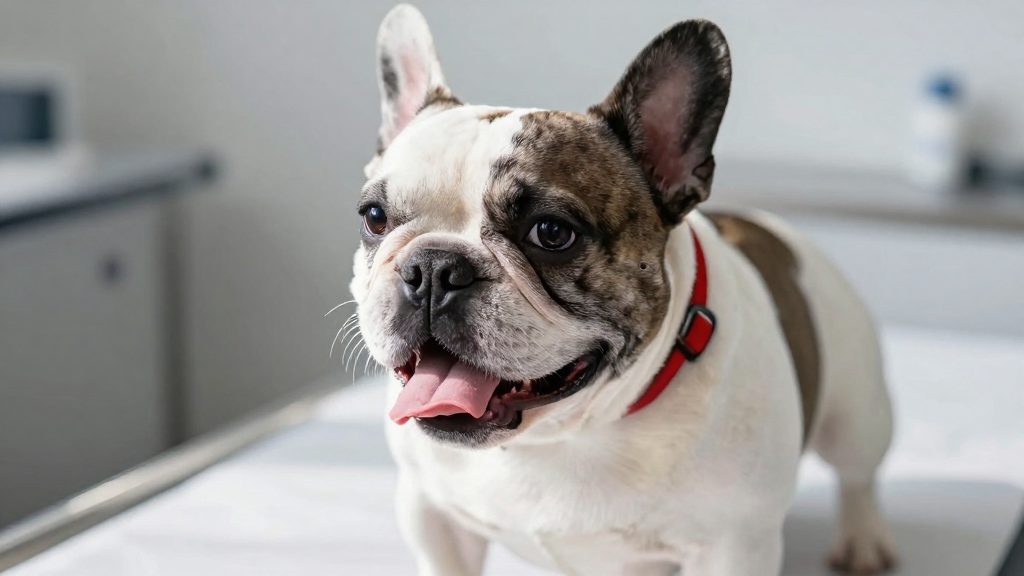
What should you do if your dog overheats?
Start cooling on the spot, before transport. According to the Ontario SPCA and Humane Society (2022), the first step is to move the dog out of the heat right away and cool it with a hose or wet towels. Cooling begins at the place where the dog overheated, and the vet visit comes after.
Step 1: Remove the dog from the heat
Move the dog into shade or a cooler area before doing anything else. Cooling does not work while the dog remains in the heat source, such as a sunny spot or a hot car.
Step 2: Apply cool water
Wet the dog with a hose or wet towels. Keep the dog cooling while you travel to the vet. The Ontario SPCA and Humane Society (2022) advises continuing to use wet towels during the drive. Offer water to drink if the dog will accept it.
Step 3: Follow the water rules
| Rule | Source |
|---|---|
| Use cool water, not cold | Pet Friendly Canada (2026) |
| Do not use ice | Ontario SPCA and Humane Society (2022) |
| Keep water out of the nose and mouth | Pet Friendly Canada (2026) |
Step 4: Stop cooling before the temperature drops too low
If you cannot get to a vet right away, the Ontario SPCA and Humane Society (2022-06-27) advises stopping cooling at 40°C so the temperature does not drop too low. This requires checking the body temperature while cooling. In the clinical case reported by Dr. Holowaychuk, active cooling was stopped at a rectal temperature of 39.7°C (103.5°F). Contact a vet immediately in all cases.
When should you go to the vet?
Any suspected heatstroke in a dog requires a veterinary visit, even if the dog appears to recover. The Ontario SPCA and Humane Society (2022-06-27) advise taking the dog to a vet immediately, because effects can appear later, even after a dog seems well. Pet Friendly Canada (2026) gives the same instruction: see a vet after recovery, since complications can develop once the dog looks normal.
Effects can appear later, so an improved appearance is not a reliable sign of recovery.
The complications that Pet Friendly Canada (2026) names are listed below.
| Complication | Why it matters after heatstroke | Source |
|---|---|---|
| Dehydration | Fluid loss can continue after the dog stops panting, and it is not reliably visible to the owner. | Pet Friendly Canada (2026) |
| Electrolyte imbalance | Changes in blood minerals can affect normal body function and can only be confirmed by testing. | Pet Friendly Canada (2026) |
| Kidney problems | Kidney injury can develop after the heat event, even when the dog seems stable at home. | Pet Friendly Canada (2026) |
The vet decides which checks are needed after heatstroke. The official sources consulted do not specify monitoring intervals, test panels or how long observation should last, so these decisions rest with the treating veterinarian.
The arrival temperature also matters. In the Clinician’s Brief by Dr. Holowaychuk, the case dog reached the clinic at 40.8°C (Clinician’s Brief, M. K. Holowaychuk, DVM, DACVECC). Owners should report the temperature readings and timing they observed, because this helps the vet assess severity.
How can you prevent heatstroke?
Prevention means controlling the environment and daily routine so a dog never reaches the point where heat becomes dangerous. Prevention does not depend on the dog showing symptoms first.
Never leave a dog inside a parked vehicle
A parked car can heat up quickly, even on a day that feels mild, and a dog inside has no way to move out of that heat. Leave the dog at home, or take it somewhere shaded and ventilated if you need to stop. Opening a window does not make a closed car safe. The official sources consulted do not give vehicle temperature figures, so treat any parked car as unsafe for a dog.
Schedule walks and exercise during cooler hours
Activity adds to the heat the dog already produces, so exercise in warm weather carries more risk than rest. Plan walks, runs and games for cooler parts of the day, such as early morning or evening. The official sources consulted do not specify fixed hours for every region, so check local conditions on the day. Before going out, check the pavement with the back of your hand. If it is too hot to hold your hand on comfortably, it is too hot for the dog’s paws. On warm days, choose grass or shaded paths, shorten the route, and avoid sustained running in full sun.
Provide shade and constant access to water at home
A dog kept outdoors needs a shaded area that stays shaded as the sun moves across the day. A roof, awning or tree canopy works better than a single fixed spot. Water should be fresh, placed in a bowl that cannot easily be tipped, and refilled often during warm weather. Do not tether a dog in full sun or in a place where it cannot move out of the heat. Indoor dogs need a cool room with air movement and water within reach.
Frequently asked questions
What should I do first if my dog shows signs of heatstroke?
Move the dog out of the heat immediately and cool it with a hose or wet towels, then offer water and go straight to a vet, continuing to cool the dog during the drive, according to the Ontario SPCA and Humane Society (2022). If you cannot reach a vet right away, the same source advises stopping the cooling at 40°C so the body temperature does not drop too far. Pet Friendly Canada (2026) recommends cool water rather than cold water and keeping water out of the dog’s nose and mouth.
Can a dog seem fine after an episode and still need a vet?
Yes. The Ontario SPCA and Humane Society (2022) advises seeing a vet even when the dog appears to have recovered, because effects can appear later. Pet Friendly Canada (2026) names dehydration, electrolyte imbalance and kidney problems as complications that can develop afterwards, so a post-recovery check is recommended.
Which signs mean a dog needs emergency care right away?
Collapse, seizures, coma, and loss of responsiveness are the most serious signs listed by the Ontario SPCA and Humane Society (2022) and Pet Friendly Canada (2026). Both sources also list confusion or staggering and a bright red tongue or unusual gum colour as signs that call for immediate veterinary attention.