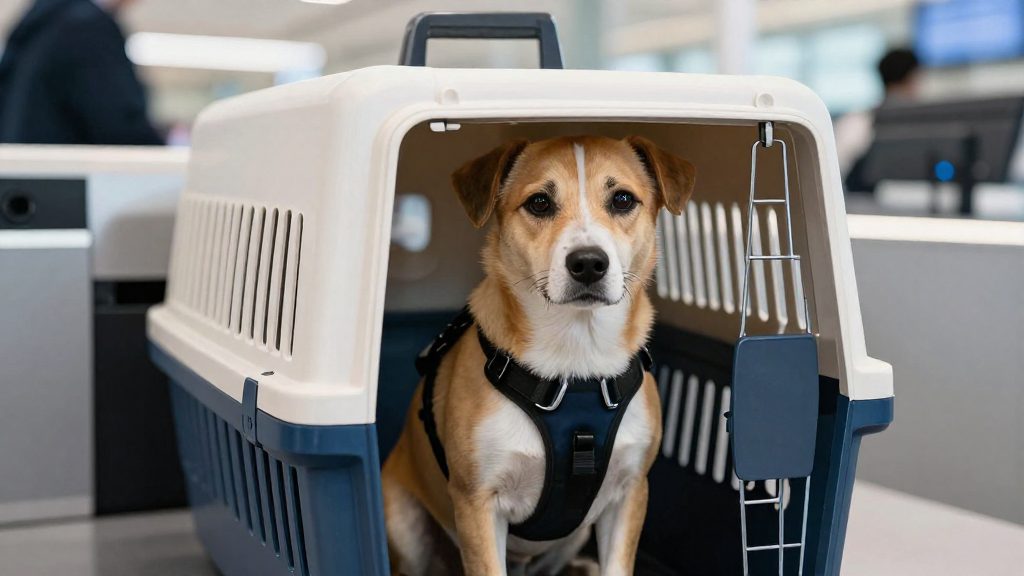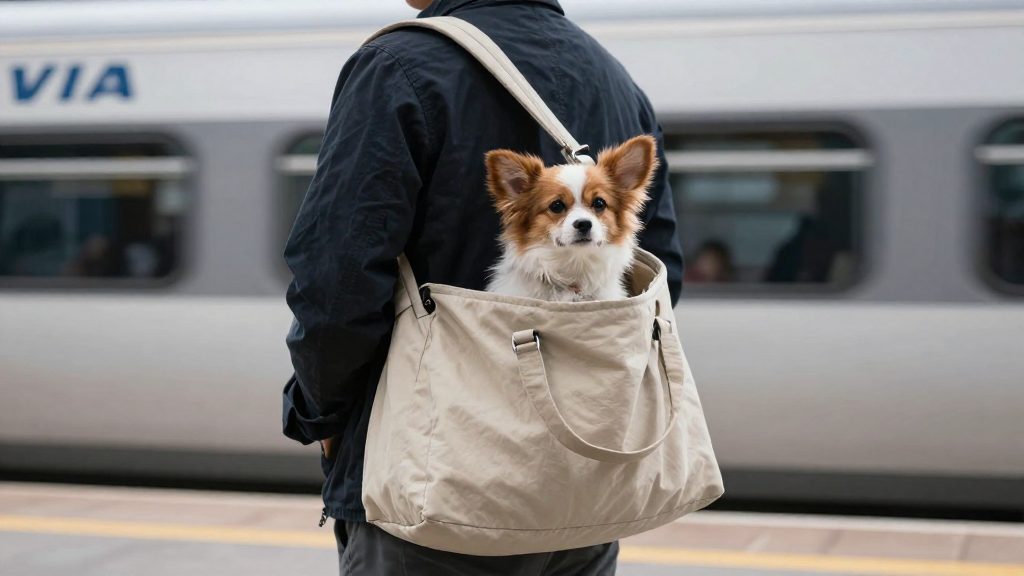
Yes. According to VIA Rail Canada (2018-08-29), small dogs and small cats are the eligible pets in passenger cars on the Québec City–Windsor Corridor. The official sources consulted do not define “small” by weight, breed, or measurement, The official sources consulted do not define “small” by weight or breed, but the dog must fit in a carrier of at most 55 x 40 x 27 cm (21.5 x 15.5 x 10.5 in.) and be able to stand, turn around and lie down inside it.
Does VIA Rail allow small dogs?
Small dogs are accepted, but the policy uses the word “small” without defining it. The rule describes the species and the travel setting, not a weight or height cut-off.
Eligible species
- Small dogs: accepted in passenger cars on the Québec City–Windsor Corridor.
- Small cats: accepted under the same passenger-car rule.
- Other species (birds, fish, reptiles, small mammals): the sources consulted do not list them as eligible, so do not assume they can travel under the pet rules.
What “small” means in practice
Although “small” is not defined by weight, the practical test is physical: the dog must fit in a carrier no larger than 55 x 40 x 27 cm (21.5 x 15.5 x 10.5 in.) and be able to stand, turn around and lie down inside it. The pet must also stay in its carrier and be attended for the whole trip, so a dog that cannot settle in a carrier for the full journey is a poor candidate.
Separate category: certified guide and service dogs
Certified guide and service dogs are not treated as pets. According to VIA Rail Canada (2018-08-29), they travel free in passenger cars, and this exemption is separate from the pet rules. A small dog that is not certified as a guide or service dog falls under the pet policy and its fee, and it cannot use the free-travel exemption.
Which routes accept pets?
The Québec City–Windsor Corridor is the only network segment for which the consulted official source states a pet policy. The corridor runs from Quebec City to Windsor in southwestern Ontario. The source describes the policy at corridor level and does not list individual stations or trains. Pets may travel in passenger cars and, per the same source, in the baggage car. Baggage car conditions and carrier requirements are covered in separate sections, so this section addresses only which routes are covered.
The network breaks down as follows:
| Category | Travel status | Source |
|---|---|---|
| Québec City–Windsor Corridor | Small dogs and small cats in passenger cars; pets may also travel in the baggage car | VIA Rail Canada (29 August 2018) |
| Certified guide and service dogs | Travel free in passenger cars, under rules separate from pet rules | VIA Rail Canada (29 August 2018) |
| Other VIA Rail routes outside the corridor | Not documented | The official sources consulted do not specify off-corridor routes |
What remains undocumented
Several questions cannot be answered from the consulted sources:
- Off-corridor routes: The sources do not state whether any VIA Rail line outside the corridor accepts pets.
- Other species and sizes: The policy names small dogs and small cats only. It does not specify whether larger dogs, rabbits, birds or other small pets are accepted.
- Currency of the policy: The most recent version consulted is dated 29 August 2018. Anyone planning a trip should check VIA Rail’s current rules before travelling.
Carrier size and rules on board
On VIA Rail, a small dog travels inside a leak-proof, ventilated carrier for the whole journey. The carrier rules below come from VIA Rail Canada (2018).
Carrier specification
| Requirement | Rule (VIA Rail Canada, 2018) |
|---|---|
| Carrier type | Hard-sided or soft-sided |
| Construction | Leak-proof and well ventilated |
| Maximum outer size | 55 x 40 x 27 cm (21.5 x 15.5 x 10.5 in.) |
| Position during the trip | At the passenger’s feet |
| Space inside | The pet must be able to stand, turn around and lie down |
The size limit is a maximum. A carrier that exceeds any of the three dimensions does not meet the rule, even if the pet fits inside it.
How the pet must stay onboard
The pet must remain in its carrier for the entire trip and be attended at all times. The carrier is therefore not a place to leave the dog while the passenger moves around the train. Choose a carrier that lets the dog stand, turn around and lie down, because the rule is about the animal’s ability to move, not only about fitting inside the box.
Before the trip, test the setup at home: place the dog in the closed carrier, check that it can rise, rotate and rest in a natural position, and confirm that the bottom is waterproof. Measure the outer dimensions of the carrier and compare them to the 55 x 40 x 27 cm limit.
Service dogs
Certified guide and service dogs fall under separate rules. According to VIA Rail Canada (2018-08-29), certified guide and service dogs travel free in passenger cars under rules separate from the pet rules. The sources consulted do not describe the on-board conditions for them, so confirm these with VIA Rail.
How do you book a pet on VIA Rail?
Pet travel on VIA Rail is limited to reserved pet spaces, and reservations are made by telephone. According to VIA Rail Canada (2018), pet spaces are subject to availability, and each train sets its own maximum number of pets per departure. Booking is therefore a two-step process: first confirm that the specific train you want has a pet space open, then secure that space before departure. Because the quota is per train, a space on one departure does not guarantee one on another, even on the same route and day.
| Booking element | Rule |
|---|---|
| Channel | Telephone reservation |
| Lead time | At least 48 hours before departure |
| Capacity | Set individually by each train |
| Availability | Limited; pet spaces are not guaranteed |
| Online booking | Not specified in the official sources consulted |
The lead time is the main planning constraint. A reservation must be made at least 48 hours before the train leaves, so a last-minute trip with a pet is not possible on this basis.
The official sources consulted do not specify whether pets can be booked through VIA Rail’s website or app, so the telephone route is the only reservation method documented in those sources. If you need to change or cancel a trip, the sources do not describe a separate procedure for pet spaces.
What does it cost to bring a dog?
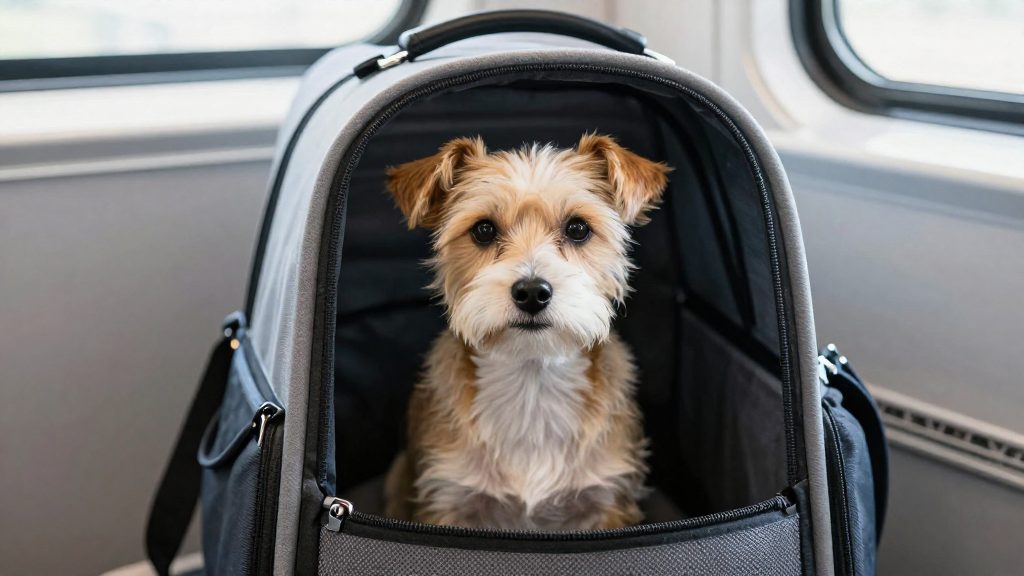
In its 29 August 2018 announcement, VIA Rail Canada listed a pet fee of $50 plus taxes per direction on the Québec City–Windsor Corridor. This figure is dated, so confirm the current fee with VIA Rail before booking. Because the fee applies to each direction, a return trip with a dog costs the fee twice, once for the outbound leg and once for the return leg. Taxes are added on top of each fee, but the official sources consulted do not specify the tax amount, so the total for a given trip cannot be calculated from the published information.
| Cost item | Amount stated | Applies to |
|---|---|---|
| Pet fee | $50 plus taxes | Each direction of travel |
| Extra seat | Purchase price not stated in the official sources consulted | Buying additional space for the passenger and pet in the passenger car |
Budgeting the trip
To estimate the cost of a journey:
- Count the number of directions. A one-way trip carries one fee; a round trip carries two.
- Multiply the fee by that count, then add the applicable taxes.
- Decide whether the extra seat is needed. Passengers can buy an additional seat for more space, which is useful for a larger carrier or a nervous animal, but its price is not given in the sources consulted.
Fee scope
The consulted sources state the fee for pets in passenger cars. They do not specify whether the same fee applies to pets travelling in the baggage car, so confirm this with VIA Rail before booking a baggage-car place.
Who cannot travel with a pet?
VIA Rail Canada’s published pet policy (2018) defines who may travel, not who may be refused. The official sources consulted do not list health, behaviour or breed criteria that would lead to a refusal at booking or boarding. The sources do not say how eligibility is decided beyond the corridor rules and space on the train, so confirm with VIA Rail.
Allergic passengers seated near a pet
VIA Rail states that it will make accommodations on board if a passenger with allergies is seated near a pet. The official sources consulted do not describe what those accommodations are, such as seat changes or reseating options. A passenger with a pet allergy should ask VIA Rail, before booking, what options exist on the specific train.
Refusal criteria and health paperwork
| Question | What the official sources state |
|---|---|
| Which animals are eligible | Small dogs and small cats in passenger cars; pets may also travel in the baggage car |
| Refusal criteria for a given pet | Not stated |
| Health paperwork (health certificates, vaccination records) | Not specified |
| Temperament or behaviour requirements | Not specified |
Keep any veterinary records your own vet recommends for travel, but do not assume a specific document is required on this route unless VIA Rail confirms it.
Service dogs and checked-baggage pets
VIA Rail handles certified guide and service dogs under a different rule set from pets. A service dog therefore does not pay the pet fee, but the source does not state whether a service dog counts toward the number of pets each train accepts.
Pets that are not service dogs can also travel in the baggage car, according to VIA Rail Canada (2018). The two options are not interchangeable:
| Category | Where it can travel | Cost basis in the source | Source and date |
|---|---|---|---|
| Certified guide and service dogs | Passenger cars | Free | VIA Rail Canada (2018) |
| Non-service pets | Passenger cars, or the baggage car | Pet fee applies in passenger cars; no separate baggage car fee is stated | VIA Rail Canada (2018) |
Confirming service dog status
Certification is the condition that triggers free travel, so the handler should be ready to show it. Before the trip:
- Confirm that the dog holds a recognised guide or service dog certification.
- Ask VIA Rail which documents it accepts as proof of certification.
- State the dog’s service status when contacting VIA Rail, so the booking follows the free-travel rule and not the pet rules.
Baggage car conditions
The official sources consulted do not specify how the baggage car is set up, how it is monitored, or whether a pet can be checked in without its owner present. Before choosing the baggage car for a small dog, request current conditions from VIA Rail in writing and confirm them for the specific train.
Frequently asked questions
Should I put my small dog in the passenger car or the baggage car?
VIA Rail Canada (2018-08-29) states that pets may travel in either the passenger cars or the baggage car on the Québec City–Windsor Corridor. The official sources consulted do not specify the conditions for baggage-car travel, so ask VIA Rail directly before choosing that option.
Is the pet fee still $50 per direction?
In 2018, VIA Rail Canada (2018-08-29) listed the pet fee at $50 plus taxes per direction. The official sources consulted do not confirm the current amount, so check the fee at booking. Passengers who want more room for their dog can buy an additional seat.
What happens if a fellow passenger has allergies?
According to VIA Rail Canada (2018-08-29), the company will make accommodations on board when a passenger with allergies is seated near a pet. Your dog must stay in its carrier and be attended for the whole trip, which limits contact with other passengers.