A veterinarian-written guide from PetsRadar (2021) suggests brushing a short-haired dog about once every two weeks. The right frequency depends on the individual dog’s coat and circumstances, so the fortnightly figure is a starting point rather than a fixed rule.
How often should you brush a short-haired dog?
The fortnightly baseline
According to PetsRadar (Dr Joanna Woodnutt MRCVS, 2021), a fortnightly session is the baseline for a short-haired dog. A short coat does not need the daily or multi-weekly grooming that long coats require, so one session every two weeks is the reference point against which other schedules are judged.
The weekly trigger
The guide suggests weekly brushing if the dog seems to need it or enjoys being brushed. Owners should judge by the coat and the dog rather than by a calendar date. Owners should judge by the coat itself rather than by a calendar date.
Why no universal schedule fits every short-coated dog
The same guide states that the right schedule depends on four factors. Each one changes the answer for a given dog:
| Factor | Effect on brushing frequency |
|---|---|
| Coat thickness | Sets the baseline for how much brushing a coat needs. |
| How dirty the dog gets | A dog that often comes home muddy or with debris needs more frequent attention than one that stays clean. |
| Skin condition | Whether the skin is sore changes the schedule. |
| Enjoyment | A dog that enjoys being brushed can be brushed weekly, according to the guide. |
Because a Labrador and a Chihuahua differ so much in shedding, a single interval cannot suit both. Owners should start at the fortnightly baseline, watch how much hair the coat releases and how the dog reacts, and move to weekly if the dog seems to need it or enjoys it.
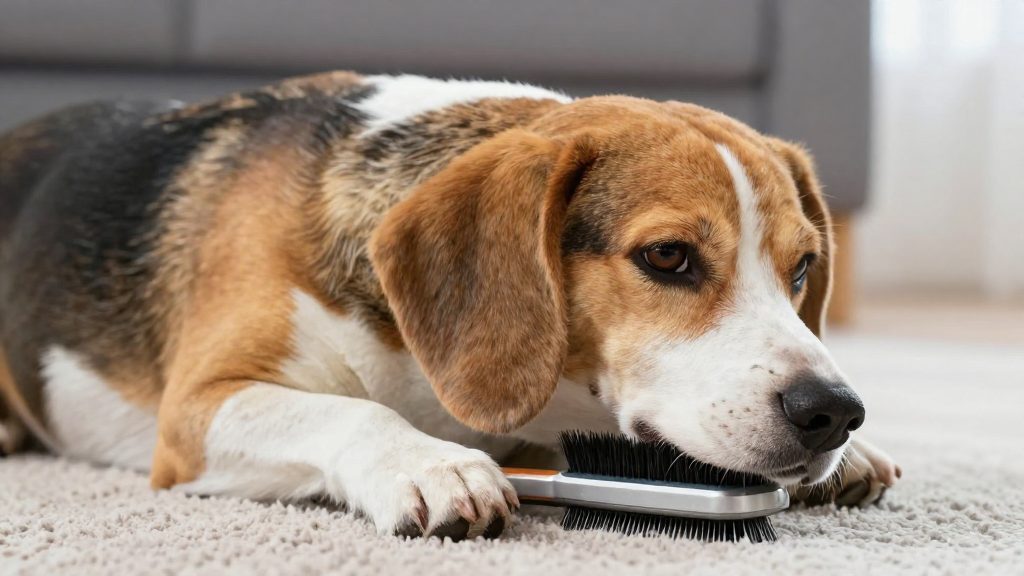
Does coat type change the schedule?
Coat type is one of the factors that sets how often a short-haired dog needs brushing. According to PetsRadar (Dr Joanna Woodnutt MRCVS, October 2021), the right schedule depends on coat thickness, how dirty the dog gets, whether the skin is sore, and how much the dog enjoys brushing. Length alone does not decide the answer, because a short coat can still be dense or sparse.
| Coat type | Example breed named in the source | Brushing demand |
|---|---|---|
| Thick, short coat | Labrador | Higher; brushing is needed more often than for a thin coat |
| Thin, short coat | Chihuahua, Greyhound | Very little coat care needed |
Thick-coated short-haired dogs need more brushing than their short hair suggests. Thick-coated breeds such as the Labrador shed more, so they need more brushing than thin-coated dogs.
Thin-coated short-haired dogs need very little coat care. For them, the brush is mainly a light tool for checking the skin and removing debris, not a routine grooming task.
Why short coats still differ in density is the point most owners miss. Two dogs with the same length of hair can have very different coats, so the length of the hair tells you little about how much brushing is needed. Check the coat by parting it with your fingers and looking at the skin and undercoat. The official sources consulted do not give a numeric measure of coat density, so judge it by feel and by how much loose hair comes away during a brush.
Why do short-haired dogs still shed?
Short-haired dogs shed because hair is replaced continuously. Each hair follicle moves through growth and resting phases, and the hairs that have finished their cycle come loose. Short length does not stop this process, so short-haired dogs still shed, and the amount depends largely on the breed. According to PetsRadar (Dr Joanna Woodnutt MRCVS, 2021), short-haired dogs still shed, and the amount depends largely on the breed.
Breed-driven volume
The coat type of a breed is the main factor in how much hair ends up on furniture and floors. Dogs with dense, thick undercoats shed more, while dogs with thin coats shed less.
| Coat type | Example breed (per PetsRadar, 2021) | Shedding level |
|---|---|---|
| Thick-coated | Labrador | Heavier |
| Thin-coated | Chihuahua, Greyhound | Lighter |
Seasonal peaks
Shedding is heavier at certain times of year, according to PetsRadar (2021). The guide does not give exact months or dates, and the official sources consulted do not specify them either. Owners should expect a visible increase in loose hair at these periods, even with a short-haired dog, rather than a constant rate all year.
What tools suit a short coat?
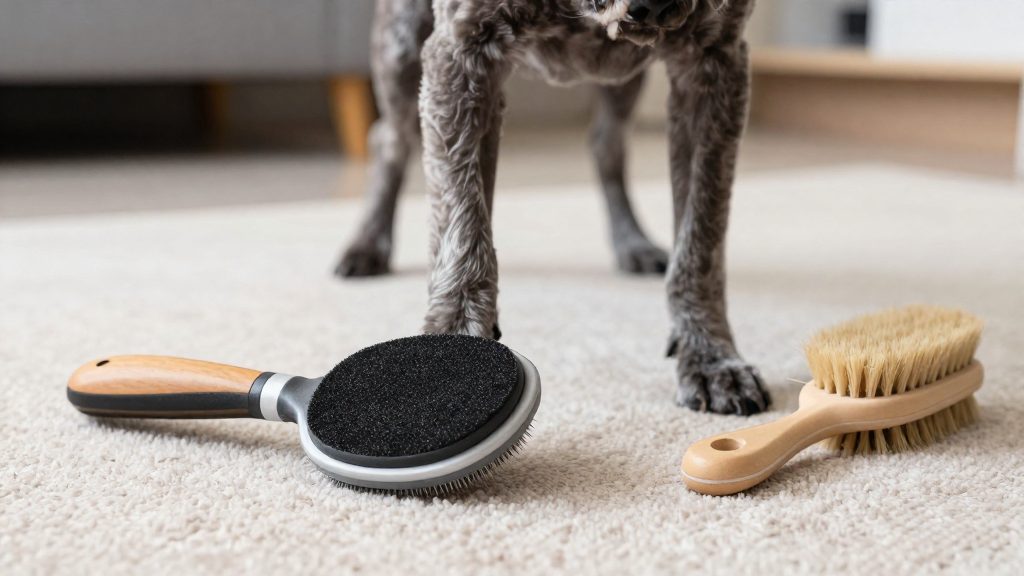
The right tool for a short coat depends on how much loose hair the dog leaves behind. The same guide does not name specific tool types or models for short coats, so the points below match each tool to that need rather than recommending particular products.
Rubber curry or grooming glove
A rubber curry or grooming glove is a common general option for lifting loose hair, but the guide does not recommend specific tools. Because short coats give less protection to the skin, use light, gentle strokes rather than pressing hard.
Soft bristle brush for finishing
A soft bristle brush is the finishing tool. It removes remaining loose hair and smooths the coat after a curry or glove pass. It is the most suitable choice for thin-coated dogs, where little coat care is needed and a single gentle pass is usually enough.
Deshedding blades: usage limits
The official sources consulted do not specify usage limits for deshedding blades on short coats, such as how many sessions per week or how much pressure to apply. The source does not cover deshedding blades, so no recommendation is made here. If you are unsure which tool suits your dog, ask your vet.
Tool matching at a glance
| Coat type (per PetsRadar, 2021-10-05) | Loose-hair need | Suitable tool approach |
|---|---|---|
| Thick short coat (e.g. Labrador) | Higher | Curry or glove first, bristle brush to finish |
| Thin short coat (e.g. Chihuahua, Greyhound) | Low | Soft bristle brush alone |
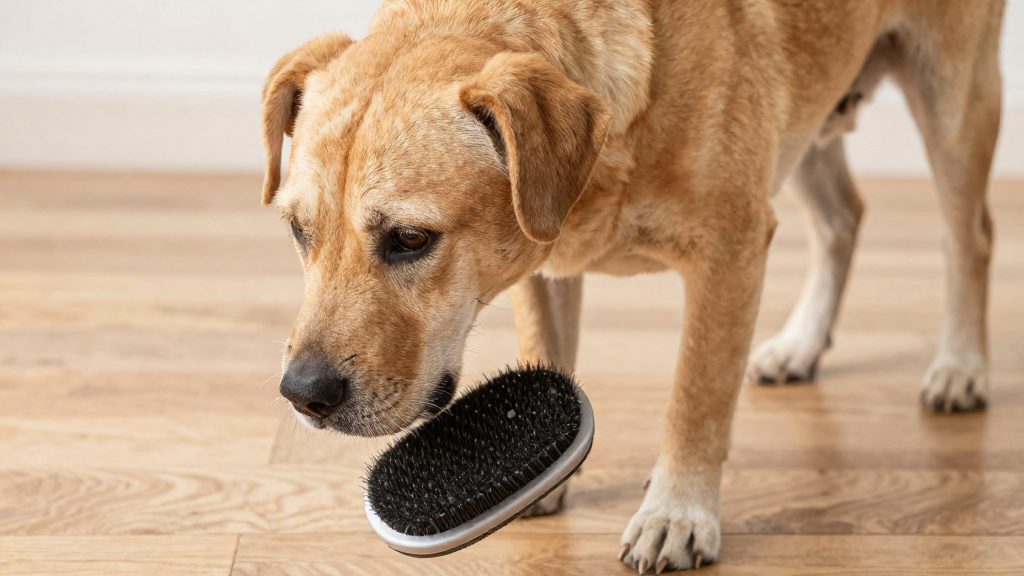
When should you brush more often?
Outdoor exposure is one reason to brush a short-haired dog between routine sessions. According to PetsRadar (Dr Joanna Woodnutt MRCVS, 2021-10-05), the right brushing schedule depends on how dirty the dog gets. A dog that gets dirtier needs more brushing than one that stays clean, even if both have the same coat type.
Three situations justify an extra session:
- Grass seeds and burrs. Brush after the walk when the coat has picked them up. Removing them on the same day keeps them from working further into the coat and from being carried indoors.
- Muddy coats. Brush only once the mud has dried. Brushing wet mud spreads it through the coat instead of lifting it out. The official sources consulted do not specify how long drying takes, so check that the mud is fully dry before starting.
- Regular dirt exposure. Dirt build-up is a schedule driver in its own right. A dog that gets dirty often needs more frequent sessions than one that rarely does.
| Trigger | Action | When |
|---|---|---|
| Grass seeds or burrs in the coat | Brush them out | Straight after the walk |
| Mud on the coat | Brush once the mud is dry | After drying, not while wet |
| Frequent dirt from outdoor use | Add sessions as exposure rises | Set by how dirty the dog gets |
Run a hand along the coat after each outing. This quick check tells you whether a session is needed that day, so you do not have to brush on a fixed timetable alone.
Is brushing safe if your dog has sore skin?
Stop brushing wherever the skin is broken, tender or lumpy. According to PetsRadar (Dr Joanna Woodnutt MRCVS, 2021), you should avoid brushing over wounds, sore areas or lumps, and you should be gentle because a short coat gives less protection to the skin. Brushing is routine grooming, so it should not be used to work over a problem area.
The caution comes from how little hair covers the skin. On a short-coated dog, the bristles and brush head reach the skin almost directly. Pressure that is harmless on a dense coat can irritate sore skin or reopen a healing spot. The same applies to lumps: the brush can press on them or drag at the skin around them.
| Skin condition | Brushing decision | How to handle it |
|---|---|---|
| Open wound | Do not brush over it | Keep the brush clear of the area |
| Sore or tender area | Do not brush over it | Brush only the coat around it, with light strokes |
| Lump | Do not brush over it | Leave it untouched and book a vet visit |
| Healthy skin nearby | Brush normally | Use light, short strokes |
To brush gently on healthy areas:
- Use short, light strokes that follow the direction of hair growth.
- Keep the brush flat against the coat rather than pressing into the skin.
- Stop as soon as the dog flinches, turns away or tries to pull back.
- Check the skin before and after brushing. If you find a new wound, a sore patch or a lump, stop.
Ask your vet when it is safe to brush over a previously sore area again.
When to see a vet about skin or coat changes
Ordinary hair on the brush is not a reason to see a vet. The guide’s clinical instruction is that anything unusual in the coat or skin warrants a vet visit. During grooming, the main task is telling ordinary shedding apart from a change that is out of the ordinary for that individual dog.
Changes that warrant a booking
Contact a vet if grooming reveals:
- Hair loss, including thinning or bare patches that were not present at the previous session
- A colour change in the coat, such as a patch that has visibly lightened or darkened
- Any other change that is unusual for the dog, including lumps or sore areas found while brushing
The sources do not grade urgency, so contact your vet promptly about any of these changes and ask whether the dog should be seen the same day.
How to check during brushing
- Part the coat in several places, including the belly, inner legs and behind the ears, and compare each area with the last session.
- Note the location, approximate size and date of any change, and photograph it to track progression.
- Record any such finding and book the visit.
Thresholds the sources do not specify
The official and veterinary sources consulted do not state how large a bare patch must be, how many days a colour change must persist, or how much extra shedding counts as unusual. Without those figures, the practical rule is to treat any doubtful change as unusual and book a vet. If a wound is open or bleeding, contact a vet promptly.
Frequently asked questions
How often should I brush my short-haired dog if I am new to grooming?
According to PetsRadar (2021), a fortnightly session is a sensible starting point. Move to weekly brushing if your dog seems to need it or enjoys the sessions.
Does a short-haired dog still shed, and does that change the schedule?
Yes. Thick-coated breeds such as Labradors shed noticeably more than thin-coated dogs such as Chihuahuas and Greyhounds, and seasonal shedding is heavier at certain times of year. Watch how much hair the coat releases and adjust the schedule to match.
When should I avoid brushing my dog?
Do not brush over wounds, sore areas or lumps, and use a gentle touch because a short coat offers less protection. After a muddy walk, wait until the mud has dried before brushing, and book a vet visit if you notice anything unusual on the skin.